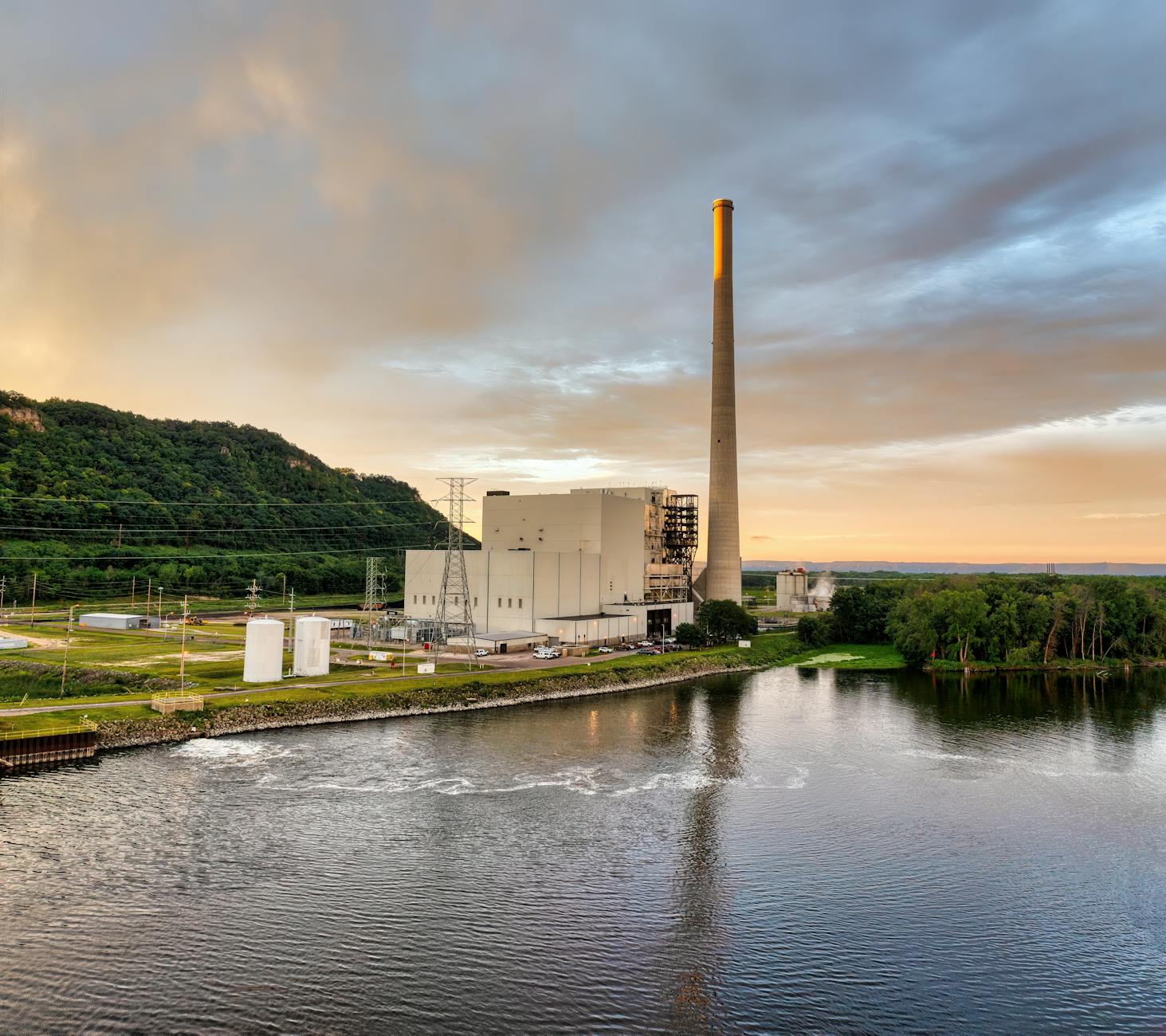
Duck Creek Power Station Asbestos Claims: A Legal Guide for Missouri Workers
If you worked at Duck Creek Power Station in Canton, Missouri, you may have been exposed to asbestos — and you may now have a diagnosis of mesothelioma, asbestosis, or lung cancer to show for it. An experienced mesothelioma lawyer in Missouri can help you understand what materials were present in the plant, which companies supplied them, which trades were most affected, and what legal rights you and your family hold today. This guide covers all of it.
Source note: Products, equipment, and companies identified in this article are drawn from public asbestos litigation records, court filings, EPA and OSHA regulatory databases, and publicly available industry records. Product identifications and company references reflect what has been alleged or documented in publicly filed litigation. This article does not constitute a finding of liability against any company.
⚠️ CRITICAL DEADLINE WARNING — READ THIS FIRST
Missouri law gives you 5 years from the date of your diagnosis to file an asbestos lawsuit. This deadline is established by Missouri Revised Statutes § 516.120 and it is the law today. Miss it by a single day and your right to compensation is permanently gone — no exceptions, no extensions, no second chances.
That 5-year window is under direct legislative threat right now. Missouri If HB 1664 (2026) is signed into law, your Missouri asbestos filing deadline could shrink from 5 years to just 2 — stripping away years of legal protection you currently have.
Even with 5 years on the clock, waiting is dangerous. The witnesses who can place you at Duck Creek are in their 70s and 80s — and they die before depositions. Employment records disappear when plants close. Building a mesothelioma case requires identifying dozens of manufacturers across dozens of jobsites. Filing claims against more than 60 asbestos bankruptcy trusts takes months of preparation. Every week of delay costs your attorney evidence that cannot be recovered.
Call a Missouri mesothelioma attorney today — not after the holidays, not after another scan, today.
What Was Duck Creek Power Station?
Duck Creek Power Station sits in Canton, Missouri — a small town in Lewis County on the Mississippi River in the northeastern corner of the state.
- Operating years: June 1976 through 2019 — over 40 years of coal-fired power generation
- Primary fuel: Bituminous Coal
- Rated generating capacity: Approximately 17 megawatts
- Operator: AmerenMissouri and its predecessor utilities
Duck Creek’s location on the Mississippi River places it within the broader Mississippi River industrial corridor — a continuous band of power plants, chemical facilities, refineries, and heavy manufacturing running along both banks of the river through Missouri and Illinois. Workers in this corridor routinely crossed state lines. An insulator from Heat and Frost Insulators Local 1 in St. Louis might spend one season at Duck Creek in Canton and the next at a facility in Madison County, Illinois — handling identical manufacturers’ asbestos products under the same industrial conditions. Asbestos exposure histories in this region are rarely confined to a single facility or a single state.
Litigation and regulatory databases sometimes reflect reporting complexities — plants that changed fuel sources, operated under multiple utility arrangements, or were associated with parent utility structures across state lines. Workers who performed labor at Duck Creek under any operator, contractor, or subcontractor arrangement during the plant’s operating life have legitimate asbestos exposure claims in Missouri regardless of how ownership is characterized in any particular database entry.
Generating Units — Official EIA Form 860 Record
The following unit-level data is drawn from the U.S. Energy Information Administration (EIA) Form EIA-860 Annual Electric Generator Report, the official federal registry of every U.S. power generating unit. The plant was retired in 2019.
| Unit | Online Date | Nameplate Capacity | Prime Mover | Fuel Type | Status |
|---|---|---|---|---|---|
| Unit 1 | June 1976 | 441 MW | Steam Turbine | Bituminous Coal | Retired |
Total nameplate capacity: 441.0 MW (EIA-verified)
Source: U.S. Energy Information Administration, Form EIA-860 Annual Electric Generator Report — EIA Plant Code 6016
Alleged Equipment Manufacturers
Unit 1 (441 MW, online June 1976) is alleged, based on North American powerhouse database records and public litigation documentation for comparable AmerenMissouri coal-fired installations of that period, to have been equipped with a Riley Stoker front-wall-fired boiler, a General Electric TC4F26 steam turbine, and a General Electric generator. Riley Stoker boiler systems manufactured during this period have been alleged in publicly filed asbestos litigation to incorporate asbestos-containing refractory, casing insulation, and high-temperature sealing materials throughout the combustion chamber and steam drum. General Electric turbine and generator components manufactured during the 1970s have similarly been alleged in asbestos litigation to incorporate asbestos-containing packing, gaskets, and insulation in turbine casings and associated steam piping systems.
Why Power Plants Like Duck Creek Were Loaded with Asbestos
Power plants run on heat. Steam is generated, pressurized, routed through turbines, and converted into electricity. Every step involves extreme temperatures, high-pressure steam lines, and equipment that would destroy ordinary insulating materials within weeks.
Asbestos — specifically chrysotile and amosite fibers — delivered properties no synthetic alternative could match at the time:
- Fireproof and resistant to temperatures exceeding 1,000 degrees Fahrenheit
- Could be woven into cloth or compressed into block insulation
- Chemically inert
- Inexpensive
Duck Creek was constructed and came online in June 1976 — squarely within the period when asbestos was still standard industrial practice in power plant construction. Federal OSHA standards for asbestos had only been issued in 1972, and enforcement in heavy industrial construction lagged well behind regulation. The construction phase alone — roughly 1973 through 1976 — involved installing the full complement of asbestos-containing pipe insulation, boiler block, refractory, fireproofing, and gasketing materials throughout the facility. Once the plant entered service, decades of maintenance, overhaul, and repair work kept disturbing those installed materials and releasing fibers.
Products from Johns-Manville, Owens-Illinois, Eagle-Picher, Armstrong World Industries, W.R. Grace, Celotex Corporation, Crane Co., and Combustion Engineering moved through the gates of power plants across Missouri and Illinois — including Duck Creek — as routine industrial supplies. Pipe covering sold under trade names like Kaylo (Owens-Illinois), Thermobestos (Eagle-Picher), and Unibestos (Pittsburgh Corning) went onto steam lines throughout the boiler room and turbine hall. W.R. Grace’s Monokote fireproofing was sprayed onto structural steel. Crane Co.’s Cranite compressed asbestos sheet was cut into gaskets for flanged pipe connections throughout the plant.
Even after OSHA began regulating asbestos exposure in Missouri worksites in 1972, and after EPA regulations tightened through the 1970s and 1980s, legacy materials — Johns-Manville block insulation, Eagle-Picher Thermobestos pipe covering, Armstrong World Industries insulating cement — remained in place throughout the facility. Workers performing routine maintenance, major overhauls, and capital improvement projects kept disturbing those installed materials and releasing fibers well into the plant’s later operating years.
This pattern was not unique to Duck Creek. Workers at the Labadie Energy Center in Franklin County, the Portage des Sioux Power Plant in St. Charles County, and the Rush Island Energy Center in Jefferson County — all operated by Ameren UE — handled the same manufacturers’ products under the same conditions. Workers who moved between Duck Creek and Illinois-side facilities such as those in Granite City — where Granite City Steel’s industrial complex consumed asbestos insulation in quantities comparable to the largest power plants in the region — carried exposure histories spanning both states. The asbestos problem at Duck Creek was a Mississippi River corridor problem, supplied by identifiable companies whose product lines are thoroughly documented in litigation records from both Missouri and Illinois courts.
Asbestos-Containing Products Documented at Duck Creek
The following materials appear in public litigation records as asbestos-containing products present at Duck Creek Power Station. These are not generalized categories — they are specific products documented through decades of asbestos litigation in Missouri, including cases filed in St. Louis City Circuit Court and in Madison County and St. Clair County, Illinois — the primary venues where Mississippi River corridor claims have been litigated for decades.
⏳ How Long Do You Have to File an Asbestos Claim in Missouri?
Missouri’s statute of limitations runs from the date of your medical diagnosis — not from when you worked at Duck Creek, not from when you first noticed symptoms, not from when a doctor first mentioned asbestos as a possibility. The 5-year clock started on the day a physician diagnosed you with mesothelioma, asbestosis, or asbestos-related lung cancer.
Once that deadline expires, Missouri courts have no discretion. There is no hardship exception. There is no equitable tolling for illness or financial hardship. Your claim is permanently and irrevocably extinguished.
That 5-year window may not survive 2026. Missouri If HB 1664 (2026) is signed into law, former Duck Creek workers diagnosed today could find their deadline currently set at five years — potentially mid-case, potentially mid-investigation. Do not wait to find out whether HB 1664 (2026) passes. Contact an asbestos attorney in Missouri today.
Celotex Corporation Products
Celotex Corporation manufactured and sold building insulation and construction products containing asbestos, including:
- Asbestos-containing ceiling tiles marketed under the Gold Bond brand
- Insulation board used in control buildings and mechanical spaces
- Pipe covering for lower-temperature service runs
- Thermal insulation materials for industrial and commercial construction
In a power plant setting, Celotex insulation board and thermal products went into boiler rooms, control buildings, and mechanical spaces throughout the facility. As these materials cracked, crumbled, and deteriorated under the heat and vibration of an operating plant, they released respirable asbestos fibers into the surrounding air. Workers who occupied spaces containing aging Celotex materials — or who broke, cut, or disturbed them during renovation or maintenance — inhaled those fibers without meaningful warning.
Celotex Corporation filed for bankruptcy as asbestos claims mounted into the billions of dollars. The Celotex Asbestos Settlement Trust was established to compensate victims. Workers with documented exposure to Celotex products at Duck Creek can file claims against this trust. Missouri residents retain the right to file asbestos trust fund claims simultaneously with an active civil lawsuit — unlike some jurisdictions that impose sequencing requirements, Missouri law permits workers to pursue both remedies at the same time, which can substantially increase total recovery.
Preparing claims against the Celotex Trust and the dozens of other trusts relevant to a Duck Creek worker’s exposure history requires assembling employment records, co-worker affidavits, medical documentation, and product identification evidence — work that takes months even when your attorney starts immediately. Former co-workers who can place you at Duck Creek and identify the products you worked around are aging. When those witnesses are gone, they are gone permanently. The time to begin is now.
Companies Named in Asbestos Litigation at Duck Creek
Public litigation records — including cases filed in St. Louis City Circuit Court, Madison County Circuit Court, and St. Clair County Circuit Court — identify companies whose products are associated with asbestos lawsuits in Missouri arising from Duck Creek Power Station and the broader Mississippi River industrial corridor.
Johns-Manville
Johns-Manville was the dominant asbestos insulation manufacturer in the United States for most of the twentieth century. At Duck Creek, Johns-Manville products appeared in virtually every insulated system in the plant:
- Aircell pipe covering on steam distribution and feedwater lines
- Block insulation on boiler surfaces, turbine casings, and high-temperature equipment
- Finishing cement and asbestos mud applied by insulators during installation and repair
Johns-Manville has been alleged in publicly filed asbestos litigation spanning decades across Missouri and Illinois courts to have failed to adequately warn workers of health risks associated with its asbestos-containing products.
Litigation Landscape
Coal-fired power stations like Duck Creek relied heavily on asbestos-containing products throughout their operational history. Documented litigation involving workers at facilities of this type and era has identified several key manufacturers as defendants, including Johns-Manville (insulation and pipe covering), Combustion Engineering (boiler components), Babcock & Wilcox (steam generators and boiler systems), Crane Co. (valves and fittings), W.R. Grace (insulation products), Garlock (gaskets and seals), and Armstrong (thermal insulation). These companies supplied critical asbestos products used in boilers, turbines, piping systems, and equipment throughout power generation facilities.
Workers exposed at Duck Creek may pursue claims through multiple avenues. Asbestos bankruptcy trust funds established by several of these manufacturers remain accessible, including the Johns-Manville Personal Injury Trust, Combustion Engineering Settlement Trust, Babcock & Wilcox Trust, Crane Co. asbestos trusts, and others. These funds were created to compensate individuals with asbestos-related illnesses and represent a significant source of recovery outside traditional litigation.
Claims arising from power station worker exposure have been documented in publicly filed litigation across Missouri and nationally. The latency period for asbestos diseases means workers who were employed at Duck Creek decades ago may only recently develop mesothelioma or other conditions requiring legal action.
Individuals who worked at Duck Creek Power Station and subsequently developed mesothelioma, lung cancer, or asbestosis should consult an experienced Missouri asbestos attorney to evaluate their eligibility for trust fund claims and litigation options. The O’Brien Law Firm and other firms experienced in asbestos cases can assess exposure history and guide affected workers through the claims process.
Missouri DNR Asbestos Notification Records
The following 4 project notification(s) are documented with the Missouri Department of Natural Resources (NESHAP program) for Ameren Missouri in Labadie. These are public regulatory records.
| Project ID | Year | Site / Building | Operation | ACM Removed | Contractor |
|---|---|---|---|---|---|
| A6884-2015 | 2016 | 2016 O&M Ameren Labadie Power Station | OM | Will advise per project. | Envirotech, Inc. |
| A7273-2017 | 2017 | Ameren Labadie Power Station | Renovation | 800sf frbl TSI, 128sf n-f galbestos, 200lf frbl TSI, 20lf frbl gasket | Envirotech, Inc. |
| 5959-2013 | 2013 | Labadie Energy Center Microwave Bldg | Demolition | caulk, metal siding (asb contr=CENPRO) (NF I-550sf; NF II-91lf) | Plocher Construction Company Inc. |
| 11366-2022 | 2022 | Ameren Labadie Entrance Bridge | Demolition | none | Spirtas Wrecking Company |
Source: Missouri Department of Natural Resources, NESHAP Asbestos Abatement & Demolition/Renovation Notification Program — public regulatory records.
Recent News & Developments
No facility-specific news articles, OSHA citations, EPA enforcement actions, or court filings referencing Duck Creek Power Station by name appear in currently available public records searched for this page. The absence of indexed reporting does not indicate an absence of historical asbestos use or worker exposure risk at this coal-fired generating facility, which operated under AmerenMissouri (formerly Union Electric) in Canton, Lewis County, Missouri.
Operational & Closure Context
Duck Creek Power Station was a coal-fired plant that, like comparable mid-century utility facilities throughout Missouri, would have incorporated asbestos-containing materials extensively in its construction and ongoing maintenance — particularly in boiler insulation, turbine lagging, steam pipe coverings, gaskets, and packing materials. AmerenMissouri has periodically retired older generating assets across its Missouri fleet as part of broader capacity and environmental compliance planning. Any decommissioning or major renovation activity at Duck Creek would trigger mandatory asbestos survey and notification requirements under EPA NESHAP regulations at 40 CFR Part 61, Subpart M, which govern the handling, removal, and disposal of regulated asbestos-containing materials (RACM) during demolition and renovation of industrial structures. Missouri’s state-level asbestos program, administered through the Missouri Department of Natural Resources (MDNR), operates in parallel with federal NESHAP requirements and would require advance notification for any qualifying work.
Regulatory Landscape for Similar Facilities
Coal-fired power stations of Duck Creek’s era and design profile have been the subject of OSHA enforcement activity nationally under 29 CFR 1926.1101 (construction) and 29 CFR 1910.1001 (general industry), covering permissible exposure limits, required monitoring, and respiratory protection during maintenance of insulated systems. Insulators, boilermakers, pipefitters, millwrights, and laborers working at facilities of this type have historically represented high-risk occupational groups in asbestos litigation nationally, including in Missouri state courts.
Product Identification Context
While no procurement or purchasing records for Duck Creek have been identified in public litigation databases at this time, power stations of comparable vintage and utility ownership in Missouri commonly used thermal insulation, boiler block, and pipe covering products manufactured by companies including Johns-Manville, Owens-Corning Fiberglas, Combustion Engineering, Babcock & Wilcox, Armstrong World Industries, and W.R. Grace. These manufacturers and their successor entities have been named defendants in Missouri asbestos litigation involving utility workers at similar facilities throughout the state. Documentation of specific products used at Duck Creek may be discoverable through AmerenMissouri procurement records, union contractor records, or maintenance logs held by the facility or its predecessors.
Workers or former employees of Duck Creek Power Station Canton Missouri AmerenMissouri who were diagnosed with mesothelioma, lung cancer, or asbestosis may have legal rights under Missouri law. Missouri § 537.046 extends the civil filing window for occupational disease claims.
For informational purposes only. Not legal advice. No attorney-client relationship is created by reading this page. © 2026 Rights Watch Media Group LLC — Disclaimer · Privacy · Terms · Copyright