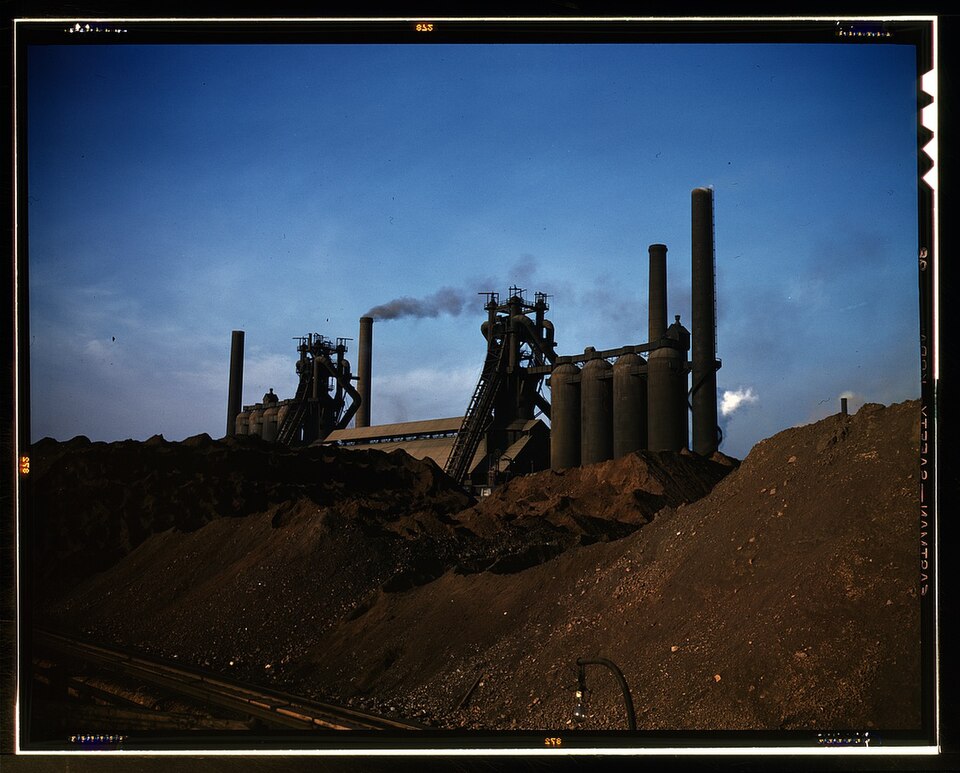
Illinois Law Applies to This Jobsite — Act Immediately
This facility is located in Illinois. Asbestos exposure claims arising from work at Illinois jobsites are governed by Illinois law, not Missouri law. Illinois’s statute of limitations for asbestos personal injury claims is 2 years from the date of diagnosis under 735 ILCS 5/13-202 — significantly shorter than Missouri’s 5-year deadline under §516.120.
Missouri residents who worked at this Illinois facility may have claims subject to both Illinois and Missouri law depending on where exposure occurred and which compensation avenue is pursued. Illinois court claims run on the Illinois five-year deadline. Asbestos bankruptcy trust claims run on separate internal trust deadlines. Do not assume Missouri’s 5-year window applies — if you have been diagnosed, consult an attorney who practices in both states immediately.
Granite City Steel Asbestos Claims: A Missouri Mesothelioma Lawyer Guide for Former Workers
A Legal and Medical Reference for Workers, Families, and Former Employees
Source note: Products, equipment, and companies identified in this article are drawn from public asbestos litigation records, court filings, EPA and OSHA regulatory databases, and publicly available industry records. Product identifications and company references reflect what has been alleged or documented in publicly filed litigation. This article does not constitute a finding of liability against any company.
⚠️ CRITICAL DEADLINE WARNING — READ BEFORE ANYTHING ELSE
If you or a family member has been diagnosed with mesothelioma, asbestosis, or asbestos-related lung cancer connected to Granite City Steel, your legal deadline is running right now — from the date of that diagnosis.
Missouri’s current statute of limitations gives you 5 years from your diagnosis date to file a lawsuit under Missouri law (§516.120). That clock never pauses. It does not wait for your health to stabilize, for you to finish treatment, or for you to feel ready to call an attorney.
That 5-year window is under direct legislative threat right now. Missouri If signed into law, Missouri’s deadline could be cut from 5 years to just 2 years — potentially wiping out the legal rights of victims who believed they had years left to act. This bill could move through the Senate and reach the Governor’s desk with little public notice.
Even under the current 5-year window, waiting destroys cases. Witnesses in their 70s and 80s die before depositions can be taken. Employment records vanish when plants close. Building a mesothelioma case requires identifying dozens of manufacturers and jobsites — work that takes months before a lawsuit is even filed. More than 60 asbestos bankruptcy trusts each have their own separate claims processes, with their own deadlines and documentation requirements.
Call a Missouri mesothelioma attorney today. Not next month. Today.
If you worked at Granite City Steel and have been diagnosed with mesothelioma, asbestosis, or asbestos-related lung cancer, The manufacturers whose asbestos-containing products were identified in litigation at this facility have faced claims alleging they knew of asbestos health hazards and failed to adequately warn workers. Johns-Manville, Owens-Illinois, Eagle-Picher, Garlock Sealing Technologies, and Armstrong World Industries — among others — made and sold asbestos-containing materials used throughout this plant while knowing exactly what those materials did to the people who worked around them. Many have already been named in litigation arising from work at this specific facility. You may have legal rights against them, and those rights exist only within a closing window of time. An experienced asbestos attorney in Missouri can evaluate your exposure history and identify every manufacturer that may be a defendant before that window closes.
What Was Granite City Steel?
The Granite City Steel facility in Granite City, Illinois has operated continuously since 1903 — over twelve decades of steel production along the Mississippi River, directly across from St. Louis, Missouri. Today operating under United States Steel Corporation, the plant has employed tens of thousands of workers across its history.
Granite City Steel sits at the heart of the Mississippi River industrial corridor — the dense belt of steel mills, chemical plants, power stations, and refining operations lining both banks of the river from St. Louis north through Alton, Granite City, and Wood River on the Illinois side, and south and west through Missouri shore communities on the other. This corridor was one of the most asbestos-intensive industrial environments in the United States. Workers regularly crossed the river for jobs, union calls, and turnaround work. A pipefitter from Heat and Frost Insulators Local 1 or UA Local 562 might work at Granite City Steel one season, at Labadie Power Station or Portage des Sioux the next, then at Monsanto’s chemical complex in Sauget before returning to the Illinois side.
Exposure histories in this region rarely respect state lines — and neither do the legal rights that arise from them. Workers with exposure on both sides of the river need to discuss their full work history with a mesothelioma lawyer familiar with both Missouri and Illinois asbestos litigation. The Missouri asbestos filing deadlines that govern your rights may differ from what applies to your Illinois exposures, and that distinction matters enormously to your case.
This was a fully integrated steel mill. Every stage of steel production occurred on site:
- Conversion of raw iron ore and coke into molten iron in blast furnaces
- Steelmaking in open-hearth and basic oxygen furnaces
- Coke processing operations
- Rolling mills and tinning operations
- Extensive on-site steam generation and power distribution infrastructure
That last point matters. The facility’s on-site generating capacity depended on high-pressure boilers, steam turbines, and thousands of feet of insulated pipe — all of which required massive quantities of thermal insulation. For most of the twentieth century, that insulation was asbestos. Products like Owens-Illinois’s Kaylo pipe insulation and Eagle-Picher’s Thermobestos block insulation were specified by engineers, purchased by facility operators, and installed by tradespeople who had no idea what they were breathing.
Why Asbestos Was Present Throughout the Entire Plant
Steel production requires sustained temperatures exceeding 2,000 degrees Fahrenheit in blast furnaces and basic oxygen furnaces. Steam systems operated at extreme pressures. Coke ovens required insulation capable of surviving years of continuous thermal cycling. Every pipe, valve, flange, expansion joint, and furnace wall needed materials that wouldn’t burn.
From the 1920s through the late 1970s — with some asbestos-containing materials persisting into the 1980s and beyond — asbestos was the answer to virtually every thermal and fire insulation need at this facility. Johns-Manville, Owens Corning, Eagle-Picher, and W.R. Grace promoted their asbestos-containing products aggressively to heavy industrial buyers throughout the Mississippi River corridor. Engineers at integrated steel mills like Granite City specified Kaylo, Thermobestos, Aircell, and Unibestos as the industry standard. W.R. Grace applied its Monokote spray fireproofing to structural steel throughout the facility’s shop buildings and processing areas — the same product used across the river at Missouri industrial sites including Labadie Power Station, Portage des Sioux Power Station, and the Monsanto chemical complex in Sauget.
If you’re researching asbestos exposure at Missouri and Illinois industrial sites, you’ll recognize these product names and manufacturers across multiple facilities. That overlap matters legally: your asbestos lawsuit in Missouri may reach defendants whose products were present at every worksite in your exposure history, not just Granite City Steel.
Asbestos-Containing Products Documented at This Facility
- Owens-Illinois Kaylo pipe insulation on steam and process lines throughout the facility
- Eagle-Picher Thermobestos block insulation on boilers, furnaces, and high-temperature equipment
- Johns-Manville Aircell pipe covering on distribution steam lines and condensate return systems
- Unibestos pipe and block insulation manufactured by Pittsburgh Corning, used extensively in high-pressure steam applications
- Garlock Sealing Technologies asbestos sheet gaskets and packing at pipe flanges, valve bonnets, and expansion joints throughout the steam and process piping systems
- W.R. Grace Monokote spray fireproofing applied to structural steel and building components across the facility — the same product W.R. Grace marketed and applied at Missouri power facilities including Labadie and Portage des Sioux
- Crane Co. Cranite gasket sheet at flanged connections on steam, water, and process lines — installed and removed by UA Local 562 members working at the facility
- Armstrong World Industries Superex insulating cement used to finish and repair pipe and boiler insulation
- Georgia-Pacific Gold Bond floor tile and ceiling tile in offices, control rooms, and shop buildings — products that contained chrysotile asbestos
- Celotex asbestos-containing wallboard and insulating board installed in administrative and operational buildings throughout the plant
- Combustion Engineering refractory and furnace lining materials in blast furnaces, open hearths, and basic oxygen furnaces
This was not a facility where asbestos was confined to one building or one department. Johns-Manville, Owens-Illinois, Eagle-Picher, Garlock, W.R. Grace, and Crane Co. distributed products throughout every corner of this plant — the same manufacturers supplying identical products to Missouri-side facilities including Labadie coal-fired power station, the Portage des Sioux generating complex, and Boilermakers Local 27 work calls throughout greater St. Louis.
Many of these manufacturers have since filed for bankruptcy and established asbestos trust funds. Missouri workers and their families may be eligible to file claims against multiple trusts simultaneously, in addition to pursuing an asbestos lawsuit in Missouri against defendants that remain solvent. A qualified asbestos cancer lawyer in St. Louis can identify which trust funds apply to your specific product and worksite exposures.
Who Was Exposed — The Workers Most at Risk
The workers who faced the heaviest asbestos exposure at Granite City Steel were those whose daily tasks required them to disturb, cut, remove, or work directly beside Kaylo, Thermobestos, Aircell, Unibestos, Garlock packing, Cranite gasket sheet, Monokote fireproofing, and Combustion Engineering refractory materials. That includes:
Pipefitters and steamfitters — many represented by UA Local 562 (Plumbers and Pipefitters, St. Louis) — who worked the high-pressure steam lines, breaking flanged joints sealed with Garlock Cranite gasket sheet, removing old Garlock packing from valve bonnets, and installing new gaskets and packing materials. UA Local 562 members frequently moved between Granite City Steel and Missouri-side industrial sites including Labadie, Portage des Sioux, and Monsanto facilities, accumulating asbestos exposures from the same manufacturers’ products at every stop.
Insulators and insulation mechanics — represented by Heat and Frost Insulators Local 1 — who installed, removed, and replaced Kaylo, Thermobestos
Missouri DNR Asbestos Notification Records
The following 10 project notification(s) are documented with the Missouri Department of Natural Resources (NESHAP program) for Independence Power & Light in Missouri City. These are public regulatory records.
| Project ID | Year | Site / Building | Operation | ACM Removed | Contractor |
|---|---|---|---|---|---|
| 3081-2002 | 2002 | 2002 O&M Missouri City Maint | Renovation | 5,000 sq. ft. equipment, 2,500 ln. ft. pipecovering. | Performance Abatement Services Inc. |
| 3297-2003 | 2003 | 2003 O&M Independence Power & Light, Missouri City | Renovation | estimate 5000 SqFt equipment, 2500 LnFt of pipe covering | Performance Abatement Services Inc. |
| 3567-2004 | 2004 | 2004 O & M Missouri City Maint. Plant | OM | 2500 lf tsi, 5000 sf tsi | Performance Abatement Services Inc. |
| 3865-2005 | 2005 | 2005 O&M Missouri City Maint | 5000 sf equipment, 5000 sf transite, 2500 lf pipecoverin | Performance Abatement Services Inc. | |
| 2830-2001 | 2001 | 2001 O&M Missouri City Maint 2001 | Renovation | 5,000 sq. ft. equipment, 2,500 ln. ft. pipecovering. | Performance Abatement Services Inc. |
| 2129-98 | 1999 | 1999 O&M Missouri City Maintenance | Renovation | 5000 sq. ft.equipment,2500 ln. ft.pipecovering friable ACM, and 5000 sq. ft. … | Performance Abatement Services Inc. |
| 2426-2000 | 2000 | 2000 O&M Missouri City Maint 2000 | Renovation | 5,000 sq. ft. equipment, 2,500 ln. ft. pipecovering. | Performance Abatement Services Inc. |
| 2425-2000 | 2000 | Missouri City # 1 & # 2 ID/FD Fans | Renovation | 3,500 sq. ft. fan housnig and duct. | Performance Abatement Services Inc. |
| 9045-2018 | 2018 | Missouri City Station | Demolition | mastic/insulation/glaze/caulk/transite/panels (32,899lf 28,902sf) | Kaw Valley Companies |
| 3042-2001 | 2001 | MO City Unit # 1 Boiler | Renovation | 400 sq. ft. duct work on stage heater | Performance Abatement Services Inc. |
Source: Missouri Department of Natural Resources, NESHAP Asbestos Abatement & Demolition/Renovation Notification Program — public regulatory records.
For informational purposes only. Not legal advice. No attorney-client relationship is created by reading this page. © 2026 Rights Watch Media Group LLC — Disclaimer · Privacy · Terms · Copyright
Recent News & Developments
Operational Incidents and Facility History
Granite City Steel, which became part of U.S. Steel’s operations, has experienced multiple significant operational disruptions over the decades that carry relevance for asbestos exposure risk. U.S. Steel’s Granite City Works has undergone repeated cycles of idling and restart, most notably in 2015 when U.S. Steel announced the indefinite idling of both blast furnaces at the facility, displacing approximately 2,000 workers. The facility was subsequently restarted in 2018 following tariff-related policy changes, a restart that involved substantial maintenance and mechanical work on aged infrastructure. Maintenance activity on older industrial equipment — including blast furnaces, hot strip mills, coke ovens, and boiler systems — routinely disturbs legacy insulation materials, refractory linings, and gaskets that in older steelmaking facilities were commonly manufactured with asbestos-containing materials. Any mechanical rehabilitation of equipment installed prior to the 1980s warrants particular scrutiny under applicable asbestos regulations.
Regulatory Landscape
No specific recent OSHA citations or EPA enforcement actions directed at asbestos abatement at the Granite City Works facility appear in publicly accessible federal databases as of the time of this writing. However, large integrated steel facilities of this era and size are subject to the National Emission Standards for Hazardous Air Pollutants (NESHAP) under 40 CFR Part 61, Subpart M, which governs asbestos handling during demolition and renovation. Any significant demolition, partial teardown, or equipment removal at the Granite City Works would trigger mandatory asbestos inspection and proper notification to the Illinois Environmental Protection Agency prior to commencement of work.
Demolition and Renovation Activity
The periodic idling and reactivation of the Granite City Works has historically required significant renovation of furnace linings, steam pipe insulation systems, and related infrastructure. These activities, particularly when performed on equipment installed before federal asbestos regulations took effect in the mid-1970s, represent documented categories of elevated exposure risk for trades workers including pipefitters, boilermakers, insulators, and ironworkers engaged in those tasks.
Litigation and Product Identification Context
Former steelworkers from integrated steel facilities of this type and vintage have been named plaintiffs in asbestos litigation across multiple jurisdictions. Manufacturers including Johns-Manville, Owens-Illinois, Combustion Engineering, Babcock & Wilcox, and Armstrong World Industries have been identified in broader steelworker asbestos litigation as suppliers of pipe insulation, boiler block insulation, refractory cement, and gasket materials commonly used in facilities like Granite City Works. While no single publicly reported verdict or settlement specifically naming the Granite City facility as the sole exposure site has been identified in available public records, former employees of integrated steel mills have historically constituted a significant population in asbestos personal injury dockets in Illinois and surrounding states.
Workers or former employees of Granite City Steel US Steel Granite City Illinois who were diagnosed with mesothelioma, lung cancer, or asbestosis may have legal rights under Missouri law. Missouri § 537.046 extends the civil filing window for occupational disease claims.