Asbestos Exposure at Iatan Generating Station — How Missouri Workers Can Pursue Compensation
Source note: Products, equipment, and companies identified in this article are drawn from public asbestos litigation records, court filings, EPA and OSHA regulatory databases, and publicly available industry records. Product identifications and company references reflect what has been alleged or documented in publicly filed litigation. This article does not constitute a finding of liability against any company.
⚠️ CRITICAL DEADLINE WARNING — READ THIS FIRST
If you have been diagnosed with mesothelioma, asbestosis, or asbestos-related lung cancer, Missouri law gives you exactly 5 years from the date of your diagnosis to file a legal claim. Under Missouri Revised Statutes §516.120, this deadline is absolute. Miss it by a single day and your right to compensation is permanently and irrevocably gone — no exceptions, no extensions, no court can help you.
That 5-year window is under direct legislative threat right now.
Missouri If signed into law, HB 1664 (2026) would cut Missouri’s statute of limitations for asbestos claims from 5 years to just 2 years. Victims diagnosed years ago who have not yet filed could find themselves instantly time-barred the moment the Governor signs it. There is no grandfather protection proposed for existing claimants. There is no warning system that will notify you when the Senate votes. You will not receive a letter in the mail.
The only protection against losing your rights — under current law or under HB 1664 (2026) — is to contact a mesothelioma lawyer in Missouri today.
Generating Units — Official EIA Form 860 Record
The following unit-level data is drawn from the U.S. Energy Information Administration (EIA) Form EIA-860 Annual Electric Generator Report, the official federal registry of every U.S. power generating unit.
| Unit | Online Date | Nameplate Capacity | Prime Mover | Fuel Type | Status |
|---|---|---|---|---|---|
| Unit 1 | May 1980 | 754.9 MW | Steam Turbine | Subbituminous Coal | Operating |
| Unit 2 | August 2010 | 999 MW | Steam Turbine | Subbituminous Coal | Operating |
Total nameplate capacity: 1,753.9 MW (EIA-verified)
Source: U.S. Energy Information Administration, Form EIA-860 Annual Electric Generator Report — EIA Plant Code 6065
Alleged Equipment Manufacturers
Unit 1 (754.9 MW, online May 1980) is alleged, based on North American powerhouse database records, to have been equipped with a Babcock & Wilcox opposed-wall-fired boiler, a General Electric TC4F30 steam turbine, and a General Electric generator. Babcock & Wilcox boiler systems manufactured during this period have been alleged in publicly filed asbestos litigation to incorporate asbestos-containing refractory, boiler block insulation, and high-temperature sealing materials throughout the combustion chamber and steam systems. General Electric TC4F30 turbine and generator components have similarly been alleged in asbestos litigation to incorporate asbestos-containing gaskets, packing, and turbine casing insulation. Unit 2 (999 MW, 2010) was commissioned after the primary period of asbestos use in industrial construction and is not associated with asbestos exposure from original installation.
If you worked at the Iatan Generating Station in Weston, Missouri — or if a family member did — and you’ve been diagnosed with mesothelioma, asbestosis, pleural plaques, or lung cancer, you have a legal claim against the manufacturers who put asbestos into the products used at this facility. This is not a question of whether asbestos was present at Iatan. It was. Public litigation records name the specific companies, the specific products, and the specific trades that were exposed. What matters now is whether you file before the Missouri asbestos filing deadline passes — and in Missouri, that deadline is both firm and under immediate threat of being cut in half.
An experienced asbestos attorney in Missouri can identify every viable claim available to you, preserve evidence before it disappears, and ensure your family receives compensation from every responsible source.
What Was the Iatan Generating Station?
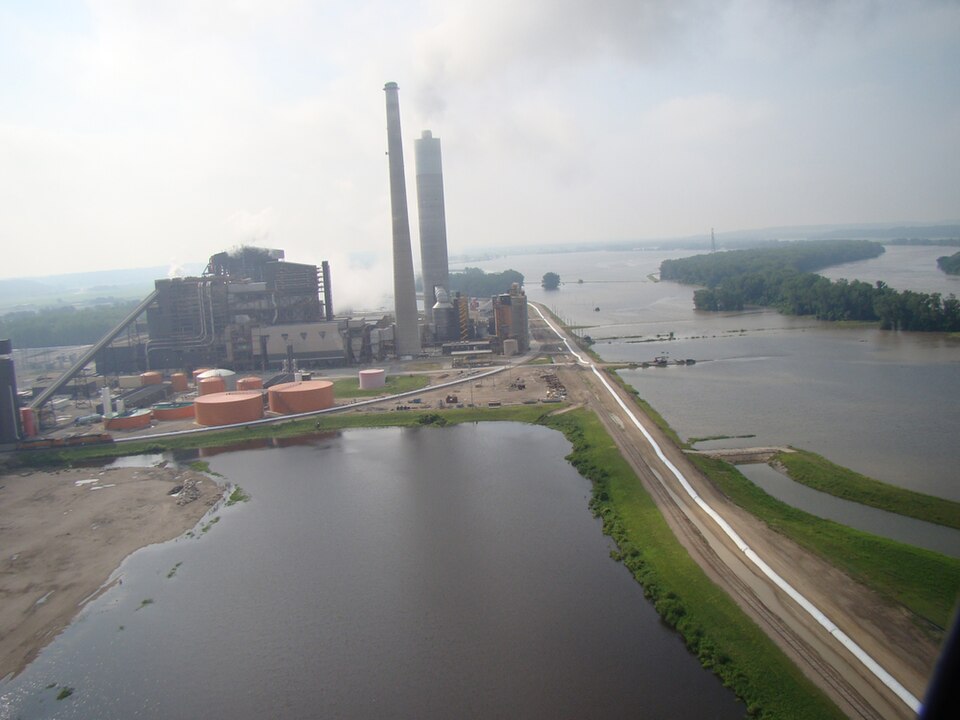
The Iatan Generating Station sits on the western bank of the Missouri River in Platte County near Weston, Missouri. It began operations in 1980 under Kansas City Power & Light, one of Missouri’s dominant regional utilities. The 2018 merger that created Evergy made that corporate successor responsible for operational control — and for the liability that flows from decades of asbestos use on the premises.
Iatan was built as a coal-fired generating station with approximately 1,400 megawatts of capacity. That generating infrastructure required:
- Massive coal-fired boilers producing steam exceeding 1,000 degrees Fahrenheit
- Miles of high-pressure steam pipe connecting boilers to turbines
- Feedwater systems, condensate systems, and auxiliary steam lines
- Hundreds of valves, pumps, flanges, and mechanical seals throughout the plant
Every one of those systems required insulation to function. From the 1950s through the early 1980s, that insulation was asbestos — applied as Kaylo pipe covering manufactured by Owens-Illinois, Thermobestos block insulation manufactured by Johns-Manville, and Aircell pipe insulation distributed throughout the Missouri power generation sector.
Iatan did not exist in isolation. The Missouri River corridor connecting Weston to the Kansas City metropolitan area, and the broader Mississippi River industrial corridor shared by Missouri and Illinois, made workers at Iatan part of a regional labor force that rotated between comparable facilities on both sides of those rivers. Workers who spent careers moving between Iatan, Labadie, Portage des Sioux, and Illinois facilities carried the same asbestos exposures — and the same legal rights — regardless of which state’s bank they were standing on when the fibers became airborne.
Why Asbestos Was Everywhere at Coal-Fired Power Plants
A coal-fired generating station converts heat into electricity. Pulverized coal burns in massive boilers, producing steam that travels through miles of pipes to drive turbines. Uninsulated high-temperature pipe loses heat rapidly, kills efficiency, and burns workers who touch it.
The insulation solution available to engineers and contractors through the mid-1980s was asbestos. Johns-Manville, Owens Corning, and Owens-Illinois marketed it aggressively to the power generation industry. It was cheap, effective, fire-resistant, moisture-resistant, and could be formed into pipe covering, block insulation, blankets, rope packing, and cement. W.R. Grace supplied Monokote fireproofing — a sprayed asbestos product applied to structural steel throughout the plant. Armstrong World Industries manufactured Thermobestos block insulation and asbestos floor tile installed in office and control room areas.
What none of those products could do was stay put when disturbed — and they were disturbed constantly at Iatan.
Every time a pipefitter broke a flanged joint sealed with a Cranite gasket manufactured by Crane Co., every time an insulator stripped old Kaylo pipe covering during a repair, every time a boilermaker cut through Johns-Manville Thermobestos-insulated ductwork, asbestos fibers went into the air. Those fibers were invisible to the naked eye. Workers breathed them without knowing it, without feeling it, without any physical warning at all.
Diagnoses don’t appear for twenty, thirty, or fifty years. That latency period is precisely why workers who left Iatan decades ago are only now receiving mesothelioma and asbestosis diagnoses — and why HB 1664 (2026)’s threatened cut to the Missouri statute of limitations demands you act now, not after your next appointment. Every month you wait is a month you will never get back.
Who Was Exposed to Asbestos at Iatan?
Plant Employees
Workers employed directly by Kansas City Power & Light at Iatan had daily contact with asbestos-containing materials throughout the facility — in the boiler house, the turbine hall, the pipe galleries, and auxiliary systems plant-wide. Those materials included Johns-Manville Thermobestos insulation on boiler surfaces, Owens-Illinois Kaylo pipe covering on steam and feedwater lines, and Garlock Sealing Technologies compressed asbestos gaskets on flanged joints throughout the system.
Construction and Maintenance Tradespeople
Union tradespeople who rotated through Iatan during construction, outages, and turnarounds faced some of the highest exposure levels documented at Missouri power plants. Many were members of Kansas City-area union locals whose membership overlapped with the broader Missouri River and Mississippi River industrial corridor.
Members of Heat and Frost Insulators Local 1 — the St. Louis-area local whose jurisdiction covered Missouri power plants and Illinois Metro East facilities alike — and members working under Heat and Frost Insulators jurisdiction in the Kansas City area handled Kaylo, Thermobestos, Aircell, and Unibestos pipe covering and block insulation directly — cutting, shaping, and applying it to pipe systems throughout the plant.
Members of UA Local 562 — the St. Louis-based pipefitters local whose members worked throughout the Missouri River and Mississippi River industrial corridor — broke flanged joints sealed with Cranite and Garlock gaskets, repacked valves and pumps with Garlock asbestos packing rope, and worked in continuous proximity to insulation being disturbed by insulators on adjacent systems. Members of Plumbers and Pipefitters UA Local 268 in Kansas City performed the same work at Iatan specifically. Members of Boilermakers Local 27 worked on and around the massive boiler structures at Iatan, directly contacting Thermobestos block insulation and asbestos-containing Combustion Engineering boiler components.
These union locals represent workers whose careers often crossed state lines. A Heat and Frost Insulators member who worked outages at Iatan likely also worked comparable outages at Labadie, Portage des Sioux, and facilities in Madison County and St. Clair County, Illinois. The asbestos exposure Missouri workers experienced did not stop at the state border, and neither do the legal rights available to them.
Exposed trades included:
- Pipefitters — breaking flanged joints sealed with Cranite gaskets manufactured by Crane Co. and Garlock compressed asbestos fiber sheet gaskets; repacking valves and pumps with Garlock asbestos packing rope
- Boilermakers — working on and around boiler surfaces insulated with Johns-Manville Thermobestos block insulation and Combustion Engineering boiler components incorporating asbestos gaskets and sealing materials
- Insulators — directly handling, cutting, and applying Owens-Illinois Kaylo pipe covering, Johns-Manville Thermobestos block insulation, Eagle-Picher Superex pipe insulation, and Pabco pipe covering distributed through regional insulation contractors
- Electricians — working in areas where Kaylo and Thermobestos dust was continuously generated by insulators and pipefitters on adjacent systems
- Millwrights — repacking pumps and mechanical seals with Garlock asbestos braided packing and cutting Garlock sheet gasket material to size in the field
Bystander Workers
Workers who never touched Kaylo, Thermobestos, Cranite, or Garlock products still got exposed. Every trade working in the same space as insulators, pipefitters, and boilermakers breathed the same air. Asbestos fibers generated by one trade settled on the tools, clothing, and skin of everyone nearby. Industrial hygiene studies conducted at comparable Missouri coal-fired power plants — including Ameren UE’s Labadie Energy Center in Franklin County, the Portage des Sioux Power Plant in St. Charles County, and the Sioux Energy Center in St. Charles County — documented that bystander workers in insulation areas routinely exceeded permissible fiber exposure limits just by occupying the same workspace.
Workers at Granite City Steel across the river in Madison County, Illinois, and at Monsanto facilities in the St. Louis area faced identical bystander exposure conditions during the same era. The industrial corridor created a shared exposure history across both states — and a shared right to pursue compensation through an asbestos lawsuit in Missouri or Illinois courts, depending on the specific facts of each worker’s case.
Family Members — Secondary Exposure
Asbestos came home. Wives who laundered their husbands’ work clothes shook loose fibers into the air in their living rooms and laundry areas. Children who hugged a father
Missouri DNR Asbestos Notification Records
The following 3 project notification(s) are documented with the Missouri Department of Natural Resources (NESHAP program) for Kansas City Power & Light in Weston. These are public regulatory records.
| Project ID | Year | Site / Building | Operation | ACM Removed | Contractor |
|---|---|---|---|---|---|
| A7775-2018 | 2019 | 2019 O&M Iatan Generating Station | OM | 150sf frbl misc asbestos, 250lf frbl misc asbestos | AT Abatement Services Inc. |
| A8012-2019 | 2020 | 2020 O&M Iatan Generating Station | OM | 150sf frbl misc asbestos, 250lf frbl misc asbestos | AT Abatement Services Inc. |
| A7446-2017 | 2017 | Iatan Generating Station | Renovation | 1000sf frbl cementitious sound proofing | AT Abatement Services Inc. |
Source: Missouri Department of Natural Resources, NESHAP Asbestos Abatement & Demolition/Renovation Notification Program — public regulatory records.
For informational purposes only. Not legal advice. No attorney-client relationship is created by reading this page. © 2026 Rights Watch Media Group LLC — Disclaimer · Privacy · Terms · Copyright
Recent News & Developments
No facility-specific asbestos litigation records, OSHA citations, or EPA enforcement actions tied directly to the Iatan Generating Station in Weston, Missouri appear in currently available public databases or recent news archives. However, the regulatory framework governing facilities of this type — coal-fired power plants constructed during the mid-twentieth century — remains active and relevant to former workers and contractors.
Regulatory Landscape
Power generating stations of Iatan’s vintage and operational profile are subject to the National Emission Standards for Hazardous Air Pollutants (NESHAP) under 40 CFR Part 61, Subpart M, which governs asbestos-containing materials during renovation and demolition activities. Any qualifying renovation or decommissioning work at the Iatan facility would require advance written notification to the Missouri Department of Natural Resources (MDNR) and compliance with EPA-mandated wet methods and disposal protocols. OSHA’s asbestos standard for construction, 29 CFR 1926.1101, similarly applies to all contractors performing maintenance, abatement, or retrofit work at existing power plant structures.
Demolition and Decommissioning Context
Iatan Unit 1, a coal-fired boiler unit operated by Kansas City Power & Light (now Evergy), underwent significant operational changes in the 2010s as part of broader utility fleet modernization. Decommissioning activities at coal plants of comparable construction vintage have historically involved asbestos abatement in boiler rooms, turbine halls, pipe chases, and control buildings — areas where thermal insulation, gaskets, packing materials, and block insulation were standard components from manufacturers such as Babcock & Wilcox, Johns-Manville, Armstrong World Industries, and Combustion Engineering. No specific abatement orders or enforcement notices for Iatan have been identified in public records at this time.
Industry-Wide Enforcement Trends
Missouri DNR and the EPA Region 7 office have periodically issued NESHAP notices of violation to utilities and demolition contractors across the Missouri River Valley corridor for improper asbestos handling during plant retirements. While none of these documented actions specifically name the Iatan Generating Station in publicly available records, the pattern of enforcement in the region reflects ongoing regulatory attention to aging coal infrastructure.
Litigation Context
Kansas City Power & Light and its successor entity Evergy have been named in asbestos-related personal injury proceedings in Missouri courts, generally involving former plant workers and insulators who performed maintenance on boiler systems and associated steam distribution equipment. Court filings in Missouri’s 16th Circuit (Jackson County) and Platte County reflect the broader litigation history involving utility operations in the Kansas City metropolitan area.
Workers or former employees of Iatan Generating Station Weston Missouri Kansas City Power Light who were diagnosed with mesothelioma, lung cancer, or asbestosis may have legal rights under Missouri law. Missouri § 537.046 extends the civil filing window for occupational disease claims.