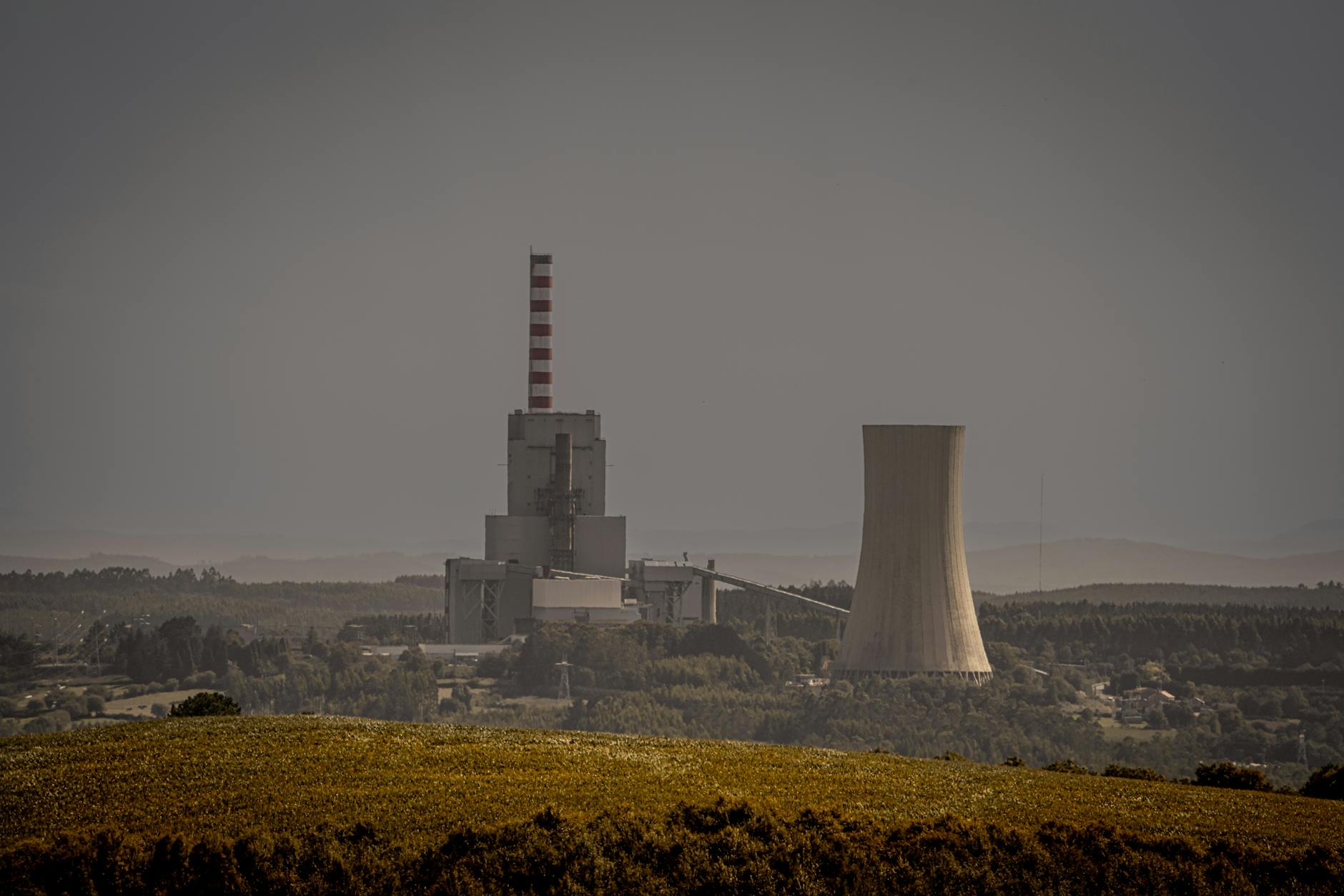
Asbestos Exposure at New Madrid Power Plant: What Missouri Workers and Families Need to Know | Mesothelioma Lawyer Missouri
New Madrid County, Missouri | Associated Electric Cooperative, Inc.
Generating Units — Official EIA Form 860 Record
The following unit-level data is drawn from the U.S. Energy Information Administration (EIA) Form EIA-860 Annual Electric Generator Report, the official federal registry of every U.S. power generating unit.
| Unit | Online Date | Nameplate Capacity | Prime Mover | Fuel Type | Status |
|---|---|---|---|---|---|
| Unit 1 | October 1972 | 650 MW | Steam Turbine | Subbituminous Coal | Operating |
| Unit 2 | June 1977 | 650 MW | Steam Turbine | Subbituminous Coal | Operating |
Total nameplate capacity: 1,300.0 MW (EIA-verified)
Source: U.S. Energy Information Administration, Form EIA-860 Annual Electric Generator Report — EIA Plant Code 2167
Alleged Equipment Manufacturers
Units 1 and 2 (650 MW each, online October 1972 and June 1977) are alleged, based on North American powerhouse database records, to have been equipped with Babcock & Wilcox cyclone-fired boilers, Brown Boveri & Cie (BBC) steam turbines (model type TC), and Brown Boveri & Cie generators. Babcock & Wilcox cyclone boiler systems manufactured during this period have been alleged in publicly filed asbestos litigation to incorporate asbestos-containing refractory, boiler block insulation, and high-temperature sealing materials. Brown Boveri turbine and generator components manufactured during the 1970s have been alleged in asbestos litigation to incorporate asbestos-containing insulation and packing materials in turbine casings, exhaust systems, and associated high-temperature piping.
Source note: Products, equipment, and companies identified in this article are drawn from public asbestos litigation records, court filings, EPA and OSHA regulatory databases, and publicly available industry records. Product identifications and company references reflect what has been alleged or documented in publicly filed litigation. This article does not constitute a finding of liability against any company.
⚠️ CRITICAL DEADLINE WARNING FOR MISSOURI WORKERS AND FAMILIES
If you or a family member has been diagnosed with mesothelioma, lung cancer, or asbestosis linked to New Madrid Power Plant — or any Missouri asbestos jobsite — the clock is running right now.
Missouri law currently gives you 5 years from the date of your medical diagnosis to file a claim under §516.120 RSMo. That deadline is firm, absolute, and merciless. Miss it by a single day and Missouri courts will permanently bar every claim you have — against every manufacturer, every contractor, every bankruptcy trust — with no exceptions and no extensions.
That 5-year window is already under direct legislative threat. If the Governor signs it, workers and families with existing diagnoses could face a dramatically compressed deadline that arrives far sooner than they ever anticipated.
But even the current 5-year window is not the safety net it appears to be. Witnesses in their 70s and 80s die before depositions can be taken. Employment records vanish when plants close. Building a mesothelioma case requires identifying dozens of manufacturers across dozens of jobsites. Claims against more than 60 asbestos bankruptcy trusts each follow separate processes with separate deadlines. Every month of delay makes your case harder to prove and easier to lose.
Do not wait for the law to change. Do not wait until the evidence disappears. Contact a Missouri mesothelioma lawyer today.
If you worked at the New Madrid Power Plant — or if a family member did — and you’ve been diagnosed with mesothelioma, lung cancer, or asbestosis, you may have a significant legal claim. This facility was built during the peak years of asbestos use in American industry, and the workers who built, maintained, and operated it faced daily exposure. Johns-Manville, Owens-Illinois, Eagle-Picher, W.R. Grace, Garlock Sealing Technologies, and Combustion Engineering supplied the asbestos-containing materials that filled this plant. They knew the risks and said nothing. An experienced asbestos attorney in Missouri can help you understand what those decades of exposure mean for your legal rights today.
Under Missouri law today, you have 5 years from your date of diagnosis under §516.120 RSMo. That deadline runs from the day a physician confirmed your diagnosis — not from when your exposure occurred, not from when you first felt symptoms. It is absolute: courts have no authority to extend it, no matter how compelling the circumstances.
That window is now under direct threat. A pending 2026 Missouri bill would cut the filing deadline from 5 years to just 2 years. It passed the Missouri House on March 12, 2026, and is pending in the Senate. Workers and families who believe they have time to wait may find that time has already run out. Do not assume the current law will still be in effect when you decide to act.
What Was the New Madrid Power Plant?
The New Madrid Power Plant sits along the Mississippi River in New Madrid County, Missouri — at the southern end of the Mississippi River industrial corridor that stretches north through St. Louis, Granite City, Alton, and the Metro East. Associated Electric Cooperative, Inc. (AECI) — a generation and transmission cooperative headquartered in Springfield, Missouri, serving rural electric cooperatives across Missouri, Iowa, and Oklahoma — operates the plant, which generates 1,300 megawatts of electricity burning subbituminous coal.
Construction ran through the 1960s and into the 1970s, the peak years of asbestos use in American heavy industry. A facility of this scale required:
- Massive steam boilers operating at extreme temperatures and pressures
- Miles of insulated steam and feed-water piping
- Large turbine generators with extensive thermal insulation
- Electrical switchgear and control systems
- Cooling systems, pumps, and valve assemblies throughout the plant
Every one of these systems incorporated asbestos-containing materials from manufacturers including Johns-Manville, Owens-Illinois, Armstrong World Industries, W.R. Grace, Crane Co., and Combustion Engineering. The EIA assigned this facility an asbestos exposure risk score of 81, reflecting documented asbestos hazards based on facility characteristics, age, and construction.
New Madrid did not exist in isolation. The tradespeople who built and maintained it moved throughout the Mississippi River industrial corridor — working one season at New Madrid, the next at the Labadie Energy Center in Franklin County, Portage des Sioux in St. Charles County, or across the river at Granite City Steel in Madison County, Illinois. Cumulative asbestos exposure followed workers across both banks of the Mississippi.
Understanding Asbestos Exposure at Missouri Power Plants
Coal-fired power generation makes extreme demands on industrial materials. Boilers burn coal at temperatures exceeding 2,000 degrees Fahrenheit. That steam moves through piping at pressures of several hundred pounds per square inch before spinning turbine blades.
From the 1930s through the late 1970s, asbestos was the standard answer to that engineering requirement. No synthetic alternative matched its combination of heat resistance, durability, and low cost. Johns-Manville wove it into pipe lagging sold under the Thermobestos trade name. Owens-Illinois pressed it into block insulation marketed as Kaylo. W.R. Grace mixed it into spray-on fireproofing sold as Monokote. Armstrong World Industries incorporated it into Superex pipe covering. Eagle-Picher supplied it in Aircell insulating products. These were not obscure materials — they were the dominant products in the industrial insulation market, specified by engineers and purchased by the ton at facilities like New Madrid.
Plant engineers and purchasing agents didn’t think they were buying a deadly product. Johns-Manville, Owens-Illinois, Eagle-Picher, and W.R. Grace knew otherwise — and are alleged in asbestos litigation to have failed to disclose evidence regarding harm for decades while continuing to sell Thermobestos, Kaylo, Aircell, and Monokote to industrial customers including AECI and its contractors. Those are alleged in asbestos litigation to have failed to adequately warn workers of known health hazards.
The same products that filled New Madrid were simultaneously being installed across the river at Granite City Steel, at Monsanto’s chemical complex in Sauget, Illinois, and at industrial facilities throughout the Metro East. The workers, the suppliers, and the asbestos were the same on both sides of the Mississippi.
Asbestos-Containing Products at New Madrid Power Plant
Documented Products and Asbestos Exposure in Missouri
Public litigation records identify Kaiser products as documented asbestos-containing materials associated with the New Madrid Power Plant. Kaiser — associated with Kaiser Gypsum, Kaiser Refractories, and related Kaiser-brand industrial products — was a significant supplier to power generation facilities throughout the Missouri-Illinois corridor. Kaiser-brand products commonly found in power plants of this era included:
- Pipe covering and block insulation containing chrysotile and amosite asbestos fibers
- Refractory materials used in and around boiler systems
- Asbestos cement products used in high-temperature applications
Workers who handled Kaiser-brand insulation, cut sections to fit around pipe fittings and flanges, or stripped and replaced aged insulation were exposed to fiber release at levels many times the concentrations now considered dangerous.
Additional Asbestos Products Present at This Facility
Beyond Kaiser, New Madrid incorporated asbestos-containing products standard across Missouri and Illinois power generation and heavy industrial facilities of this era — the same products documented at Ameren UE’s Labadie Energy Center in Franklin County, the Portage des Sioux Power Plant in St. Charles County, the Rush Island Energy Center in Jefferson County, and across the river at Granite City Steel in Madison County, Illinois:
- Kaylo (Owens-Illinois) — pre-formed pipe covering and block insulation containing amosite and chrysotile asbestos, one of the most widely specified pipe insulation products in American power plant construction
- Thermobestos (Johns-Manville) — pipe covering, block insulation, and insulating cement used on steam lines and boiler systems throughout plants of this era
- Aircell (Eagle-Picher) — magnesia block and pipe insulation, commonly applied to high-pressure steam systems
- Monokote (W.R. Grace) — spray-applied fireproofing applied to structural steel during construction, releasing fibers during application and whenever the coating was subsequently disturbed
- Superex (Armstrong World Industries) — high-temperature pipe and equipment insulation used on boiler surfaces and turbine systems
- Unibestos (Pittsburgh Corning) — pipe covering used in high-temperature industrial applications
- Cranite (Crane Co.) — asbestos-containing sheet gasket material used at flanged pipe connections throughout the plant’s steam and water systems
- Gold Bond (National Gypsum) — asbestos-containing board and finishing products used in plant construction
- Pabco (Fibreboard Corporation) — asbestos insulation products used on piping and equipment
Gaskets and valve packing deserve particular attention. When members of Plumbers and Pipefitters UA Local 562 out of St. Louis broke flanged connections during routine maintenance, they scraped out old Cranite sheet gasket material and Garlock packing that crumbled and released fibers directly into their breathing zone. The replacement gaskets they installed were often equally hazardous. This was not an occasional task — it was a routine part of every outage, every repair, every year these men worked.
Each of these manufacturers either entered bankruptcy due to asbestos liability or faced massive civil verdicts — and many established asbestos bankruptcy trusts that Missouri workers and families can file claims against today, separate from any civil lawsuit.
Who Was Exposed at New Madrid Power Plant?
Mesothelioma and asbestos lung cancer do not discriminate by job title. Every trade that worked
Missouri DNR Asbestos Notification Records
The following 2 project notification(s) are documented with the Missouri Department of Natural Resources (NESHAP program) for Ameren Missouri in Festus. These are public regulatory records.
| Project ID | Year | Site / Building | Operation | ACM Removed | Contractor |
|---|---|---|---|---|---|
| A8955-2025 | 2025 | Ameren Rush Island Power Plant | Demolition | 25lf frbl TSI, 120sf frbl tank insul, 680lf frbl closth wire insul, 136sf frb… | American Asbestos Abatement dba Midwest Service Group |
| 8696-2017 | 2017 | Rush Island Auxillary Service Building-south side | Demolition | TSI, roof drip edge (TSI-300lf,rf-1200lf) | Spirtas Wrecking Company |
Source: Missouri Department of Natural Resources, NESHAP Asbestos Abatement & Demolition/Renovation Notification Program — public regulatory records.
For informational purposes only. Not legal advice. No attorney-client relationship is created by reading this page. © 2026 Rights Watch Media Group LLC — Disclaimer · Privacy · Terms · Copyright
Recent News & Developments
No facility-specific news articles, OSHA citation records, or EPA enforcement actions targeting the New Madrid Power Plant in New Madrid, Missouri, appear in current public databases or recent scraped sources. However, the broader regulatory and litigation landscape surrounding coal-fired generating stations of this era remains highly relevant to workers and former employees at this site.
Operational and Regulatory Context
The New Madrid Power Plant, operated by Associated Electric Cooperative, Inc. (AECI), has been subject to environmental scrutiny consistent with coal-fired facilities of its age and scale. Plants of this generation — New Madrid’s units came online in the 1970s — were constructed during a period when asbestos-containing materials were standard components in boiler insulation, turbine lagging, pipe jacketing, and refractory materials. Any unplanned outages, maintenance shutdowns, or emergency repair events at facilities like New Madrid carry an inherent risk of disturbing friable asbestos materials, particularly in boiler rooms and steam generation areas where thermal insulation was applied in thick layers.
NESHAP and OSHA Regulatory Framework
Under EPA’s National Emission Standards for Hazardous Air Pollutants (NESHAP), 40 CFR Part 61 Subpart M, any renovation or demolition activity at facilities such as the New Madrid Power Plant that involves regulated asbestos-containing material (RACM) triggers mandatory notification to the Missouri Department of Natural Resources and requires controlled removal by licensed abatement contractors. OSHA’s construction standard, 29 CFR 1926.1101, and general industry standard, 29 CFR 1910.1001, impose parallel requirements on contractors performing insulation removal or maintenance in legacy power plant environments.
Demolition and Decommissioning Considerations
Associated Electric Cooperative has faced ongoing pressure related to Clean Air Act compliance at its Missouri coal fleet. While no publicly documented full decommissioning of the New Madrid Power Plant has been confirmed in available records as of this writing, any future phased retirement or unit decommissioning would constitute a major regulated demolition event under NESHAP, potentially releasing legacy asbestos fibers from decades-old thermal system insulation.
Product Identification and Manufacturer Links
Power plants constructed in the 1970s routinely incorporated products from manufacturers including Johns-Manville, Owens-Corning, Combustion Engineering, Babcock & Wilcox, and Armstrong World Industries — companies whose asbestos-containing boiler insulation, pipe covering, refractory cement, and gasket materials have been extensively documented in utility sector litigation nationwide. Workers at the New Madrid plant who handled or worked near these materials during installation, maintenance, or emergency repair may have sustained significant fiber exposure.
Litigation Landscape
No publicly reported verdicts or settlements specifically naming the New Madrid Power Plant as a defendant facility have been identified in available court records. However, asbestos litigation involving Missouri utility workers and contractors at comparable AECI and associated cooperative facilities has appeared in Missouri circuit courts, with claims frequently naming insulation product manufacturers rather than plant operators as primary defendants.
Workers or former employees of New Madrid Power Plant New Madrid County Missouri who were diagnosed with mesothelioma, lung cancer, or asbestosis may have legal rights under Missouri law. Missouri § 537.046 extends the civil filing window for occupational disease claims.