Missouri Mesothelioma Lawyer Guide: Asbestos Exposure at Sioux Energy Center and Your Legal Rights
Source note: Products, equipment, and companies identified in this article are drawn from public asbestos litigation records, court filings, EPA and OSHA regulatory databases, and publicly available industry records. Product identifications and company references reflect what has been alleged or documented in publicly filed litigation. This article does not constitute a finding of liability against any company.
⚠️ CRITICAL DEADLINE WARNING FOR MISSOURI WORKERS AND FAMILIES
Missouri’s current statute of limitations for asbestos and mesothelioma claims is 5 years from the date of your medical diagnosis — not from when your exposure occurred. Miss this deadline by a single day and Missouri courts will permanently bar you from recovering any compensation. No exceptions. No extensions.
That 5-year window is under direct legislative attack right now. Missouri Missouri’s asbestos statute of limitations passed the House on March 12, 2026, and is currently pending in the Senate. If signed into law, it would slash the filing deadline from 5 years to just 2 years — cutting the time available to Missouri asbestos victims by more than half. The Governor could sign it at any time.
Even under the current 5-year window, waiting costs you. Witnesses in their 70s and 80s die before depositions can be taken. Employment records disappear when plants close. Building a mesothelioma case requires identifying dozens of manufacturers across dozens of jobsites — work that takes months. Claims against 60+ asbestos bankruptcy trusts must each be filed through separate processes with their own deadlines and requirements.
Do not wait to find out whether the law changes. Call a Missouri mesothelioma attorney today.
If you worked at the Sioux Energy Center in West Alton, Missouri — or if a family member did — you may have been exposed to asbestos without ever being warned. Workers who developed mesothelioma, asbestosis, lung cancer, or pleural disease after working at this facility have legal rights against the manufacturers who built asbestos into the plant and the corporate successors who operated it.
This article explains what happened at Sioux Energy Center, who bears legal responsibility, and what you must do now — before your deadline expires or is cut in half by Missouri’s asbestos statute of limitations, currently pending in the Missouri Senate.
What Was the Sioux Energy Center?
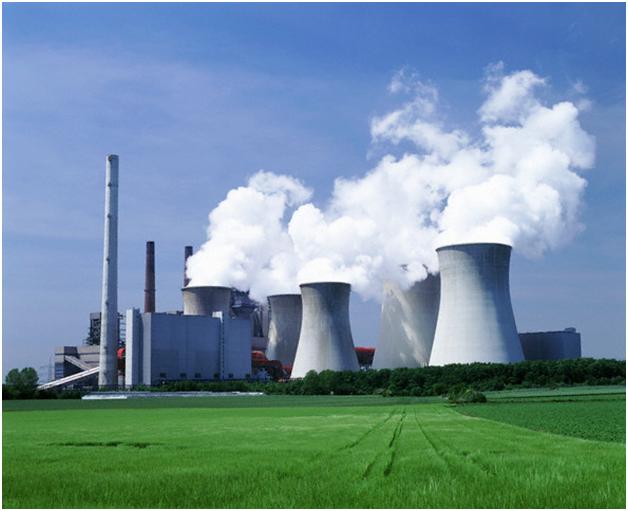
The Sioux Energy Center is a coal-fired power generation facility on the west bank of the Mississippi River in West Alton, Missouri — directly across from the Illinois industrial communities of Alton and Grafton. It has operated since 1967, generating approximately 549.7 megawatts of electricity burning subbituminous coal.
The plant was built and originally operated by Union Electric Company, the predecessor to Ameren Corporation. Ameren was formed in 1997 through the merger of Union Electric and CIPSCO Incorporated — the parent of Central Illinois Public Service Company and Illinois Power Co.
For more than five decades, Sioux Energy Center has been central to St. Louis-area power infrastructure — alongside Ameren UE’s Labadie Energy Center in Franklin County, Portage des Sioux Power Plant in St. Charles County, and Rush Island Energy Center in Jefferson County. It has also been the site of documented asbestos exposure affecting workers across multiple trades during construction, commissioning, and decades of maintenance and overhaul cycles.
Sioux Energy Center sits within the Mississippi River industrial corridor — a dense concentration of refineries, chemical plants, steel mills, and power stations running from St. Louis north through Granite City and Alton, Illinois. Many workers who logged hours at Sioux also worked across the river at Granite City Steel, Monsanto’s Sauget complex, and the cluster of petrochemical plants along the Illinois bank. Those workers carry exposure histories spanning both states — a fact that shapes both their medical picture and their legal options.
Workers with cross-state exposure histories face complex, time-sensitive legal questions that require immediate attention from an experienced asbestos attorney.
Generating Units — Official EIA Form 860 Record
The following unit-level data is drawn from the U.S. Energy Information Administration (EIA) Form EIA-860 Annual Electric Generator Report, the official federal registry of every U.S. power generating unit.
| Unit | Online Date | Nameplate Capacity | Prime Mover | Fuel Type | Status |
|---|---|---|---|---|---|
| Unit 1 | May 1967 | 549.7 MW | Steam Turbine | Subbituminous Coal | Operating |
| Unit 2 | May 1968 | 549.7 MW | Steam Turbine | Subbituminous Coal | Operating |
Total nameplate capacity: 1,099.4 MW (EIA-verified)
Source: U.S. Energy Information Administration, Form EIA-860 Annual Electric Generator Report — EIA Plant Code 2107
Alleged Equipment Manufacturers
Units 1 and 2 (549.7 MW each, online May 1967 and May 1968) are alleged, based on North American powerhouse database records, to have been equipped with Babcock & Wilcox cyclone-fired boilers, General Electric CC2F43 steam turbines, and General Electric generators. Babcock & Wilcox cyclone boiler systems manufactured during this period have been alleged in publicly filed asbestos litigation to incorporate asbestos-containing refractory, boiler block insulation, and high-temperature sealing materials throughout the combustion chamber and steam systems. General Electric CC2F-series turbine and generator components have been alleged in asbestos litigation to incorporate asbestos-containing packing, gaskets, and turbine casing insulation materials from suppliers including Johns-Manville, Owens-Illinois, and Combustion Engineering.
Your Legal Deadline: What Missouri Law Says — and What Missouri’s asbestos statute of limitations Would Change
The Current 5-Year Deadline
Under Missouri §516.120, you have 5 years from the date of your medical diagnosis to file an asbestos or mesothelioma lawsuit. The clock runs from the day a physician diagnosed you — not from when you were exposed, not from when you first had symptoms. From diagnosis.
Miss that deadline by one day, and your claim is gone. No judge has discretion to revive a time-barred asbestos case in Missouri.
Missouri Missouri’s asbestos statute of limitations passed the House of Representatives on March 12, 2026, and is now before the Missouri Senate. If enacted, it would reduce the asbestos lawsuit filing deadline from 5 years to just 2 years — eliminating more than three years of legal protection currently available to Missouri asbestos victims.
This is not a distant threat. Missouri’s asbestos statute of limitations has already cleared the House. It is active in the Senate now. Workers who were counting on additional time may find their claims suddenly at risk the moment it is signed.
There is one safe response to a bill that could cut your deadline by more than half: act now, under current law, while the full 5-year window still protects you.
Why Five Years Is Not as Long as It Sounds
Even without Missouri’s asbestos statute of limitations, experienced Missouri asbestos attorneys see cases damaged — or destroyed — by delay. Here is what happens while you wait:
Witnesses die. The workers who can testify they saw you working alongside asbestos insulators at Sioux Energy Center, or worked the same outage cycles you did, are in their 70s and 80s. When they die before depositions are taken, that testimony is gone permanently.
Records disappear. Employment records, union apprenticeship logs, contractor files, and purchasing records linking specific asbestos products to specific jobsites are fragile. Plants close. Companies dissolve. Records retention periods expire. Every year that passes is a year in which critical documentation may be lost.
Building the case takes months. A mesothelioma case arising from Sioux Energy Center requires identifying the specific products you were exposed to, the manufacturers who made them, the contractors who installed them, and the corporate successors who now bear liability. That investigation must begin well before any deadline arrives.
Trust fund claims require separate processes. More than 60 asbestos manufacturers have filed for bankruptcy and established compensation trusts. Many whose products were present at Sioux — Johns-Manville, Owens Corning, Eagle-Picher, Pittsburgh Corning — are among them. Each asbestos trust fund claim requires its own claim form, evidence package, and processing timeline. Filing trust claims alongside a lawsuit requires careful coordination. Starting late means running out of time.
Missouri’s asbestos statute of limitations could be signed at any time. Workers who have not yet retained an attorney may find themselves scrambling to meet a suddenly shortened deadline — or may discover that time has already run out.
Call a Missouri mesothelioma attorney today. Not after the legislative session ends. Not after the next medical appointment. Today.
Who Is Legally Responsible? The Corporate Chain Behind Asbestos Exposure at Sioux Energy Center
Any experienced Missouri asbestos attorney handling Sioux Energy Center claims will tell you that the chain of corporate responsibility runs through multiple entities, all of which have been named as defendants in asbestos litigation connected to this facility:
- Union Electric Co.
- Ameren Corp.
- Ameren Energy Generating Co.
- Ameren Illinois Co.
Corporate restructuring does not extinguish liability for exposures that occurred under these entities’ oversight. Courts trace liability through this corporate lineage. Those claims may be filed in St. Louis City Circuit Court — one of the most experienced asbestos litigation venues in Missouri — or, for workers with significant Illinois exposure history, in Madison County Circuit Court or St. Clair County Circuit Court, both of which maintain well-established asbestos dockets with plaintiff-favorable procedural rules.
Identifying the correct defendants, the correct court, and the correct legal theories requires immediate consultation with toxic tort counsel who knows both Missouri and Illinois asbestos law. Every day of delay is a day in which witnesses, testimony, and documentation may be lost.
Why Was Asbestos Used at Sioux Energy Center?
The Thermal Demands of Coal-Fired Power Generation
Subbituminous coal burns in massive furnaces to produce steam superheated above 1,000 degrees Fahrenheit and pressurized to lethal levels. That steam drives turbine generators through a network of pipes, valves, flanges, and seals operating under extreme thermal stress.
Asbestos was engineered into this system because, for most of the twentieth century, it was the most cost-effective material available for thermal insulation and fire protection. It does not burn. It does not melt at power plant temperatures. It was lightweight, easy to apply, and manufactured cheaply in enormous quantities by companies that had known for decades it was killing the workers who handled it.
Missouri DNR Asbestos Notification Records
The following 1 project notification(s) are documented with the Missouri Department of Natural Resources (NESHAP program) for Ameren Corporation in Festus. These are public regulatory records.
| Project ID | Year | Site / Building | Operation | ACM Removed | Contractor |
|---|---|---|---|---|---|
| A5981-2012 | 2013 | 2013 O&M Ameren Missouri Rush Island Energy Center | OM | Will advise per project. | Envirotech, Inc. |
Source: Missouri Department of Natural Resources, NESHAP Asbestos Abatement & Demolition/Renovation Notification Program — public regulatory records.
For informational purposes only. Not legal advice. No attorney-client relationship is created by reading this page. © 2026 Rights Watch Media Group LLC — Disclaimer · Privacy · Terms · Copyright
Recent News & Developments
No facility-specific enforcement actions, litigation records, or regulatory citations directed at the Sioux Energy Center in West Alton, Missouri appear in currently available public databases or recent news sources. However, the absence of a discrete public record does not indicate the absence of asbestos-related activity; coal-fired generating stations of this type and era routinely operated under conditions that present well-documented asbestos hazards, and relevant regulatory frameworks continue to apply to the facility and its operators.
Regulatory Landscape
The Sioux Energy Center, operated by Ameren Missouri, remains subject to federal asbestos regulations governing facilities of its class. Under EPA NESHAP regulations codified at 40 CFR Part 61, Subpart M, any renovation or demolition activity that disturbs regulated quantities of friable asbestos-containing material (ACM) requires advance written notification to the Missouri Department of Natural Resources (MDNR), proper wetting and containment procedures, and certified disposal at an approved site. OSHA’s construction standard at 29 CFR 1926.1101 and the general industry standard at 29 CFR 1910.1001 impose parallel obligations on contractors and plant maintenance workers performing tasks that may disturb ACM in place, including boiler insulation, turbine lagging, pipe wrap, and gasket materials.
Industry Context for Coal Generation Facilities
Power generation facilities of comparable vintage — units constructed or substantially retrofitted prior to the mid-1970s — incorporated asbestos-containing products from manufacturers including Johns-Manville, Owens-Illinois, Combustion Engineering, Babcock & Wilcox, Armstrong World Industries, and W.R. Grace, among others. These products appeared routinely in high-temperature applications: boiler block insulation, turbine casing lagging, flange gaskets, packing materials, refractory cements, and control room floor tiles. Ameren Missouri’s generating fleet, including the Sioux Energy Center, has historically been the subject of general asbestos abatement inquiries consistent with industry-wide compliance activity, though no facility-specific enforcement order for this site has been identified in publicly available OSHA or EPA records at this time.
Demolition and Decommissioning Considerations
As Ameren Missouri has advanced its clean energy transition commitments, coal-generating units across its Missouri portfolio have been evaluated for retirement. Any future decommissioning or large-scale renovation at the Sioux Energy Center would trigger mandatory NESHAP notification requirements and comprehensive ACM surveys under Missouri state regulations, creating a formal public record through MDNR. Interested parties and former workers should monitor MDNR demolition notification filings for future activity at this address.
Litigation Context
While no publicly reported verdict or settlement has been identified that names the Sioux Energy Center specifically as a site of exposure, asbestos personal injury litigation in Missouri regularly involves Ameren predecessor entities and the contractors and insulators who performed maintenance work at Missouri coal-fired generating stations throughout the latter half of the twentieth century.
Workers or former employees of Sioux Energy Center West Alton Missouri Ameren who were diagnosed with mesothelioma, lung cancer, or asbestosis may have legal rights under Missouri law. Missouri § 537.046 extends the civil filing window for occupational disease claims.