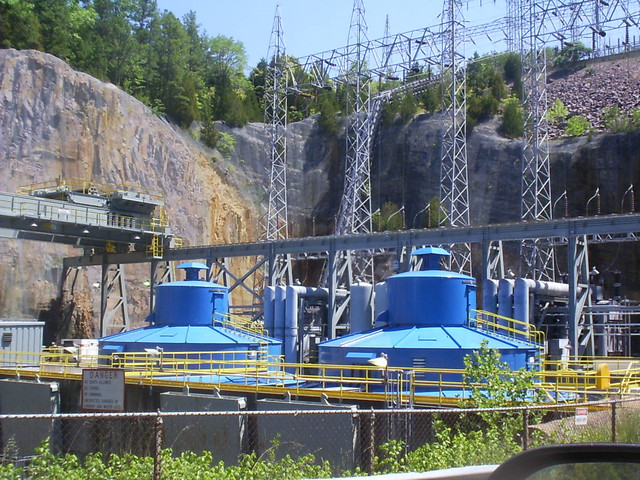
Taum Sauk Hydroelectric Plant Asbestos Claims: A Legal Guide for Former Workers and Families
Exposure History, Corporate Defendants, and Your Rights Before Missouri’s Filing Deadline
Source note: Products, equipment, and companies identified in this article are drawn from public asbestos litigation records, court filings, EPA and OSHA regulatory databases, and publicly available industry records. Product identifications and company references reflect what has been alleged or documented in publicly filed litigation. This article does not constitute a finding of liability against any company.
⚠️ CRITICAL DEADLINE WARNING — READ THIS FIRST
Missouri law gives you 5 years from your mesothelioma or asbestos disease diagnosis to file a lawsuit — not 5 years from exposure, but 5 years from the date a doctor diagnosed you.
Miss that deadline by a single day, and Missouri courts will permanently bar your claim. No exceptions. No extensions.
That window may shrink further. Missouri If HB 1664 (2026) is signed into law, Missouri’s asbestos statute of limitations drops from 5 years to 2 years — wiping out recovery rights for thousands of workers who are relying on the current law right now. The Senate could act with little warning. There will be no grace period.
Even under current law, delay costs you. Witnesses who can confirm your asbestos exposure are in their 70s and 80s — and some die before depositions are taken. Employment records disappear when plants change hands or close. Building a mesothelioma case means identifying and documenting dozens of manufacturers, jobsites, and bankruptcy trusts. That process takes months. Every week of delay makes it harder — or makes it impossible.
If you or a family member has been diagnosed with mesothelioma or another asbestos disease after working at Taum Sauk, call a Missouri mesothelioma attorney today.
If You Worked at Taum Sauk, You Were Likely Exposed to Asbestos
Deep in the St. Francois Mountains of Reynolds County, Missouri, the Taum Sauk Hydroelectric Plant has employed generations of skilled tradespeople since it began generating electricity in 1963. Built and operated by Union Electric Co. — the predecessor to today’s Ameren Corp. — the plant generates 408 megawatts of pumped-storage hydroelectric power from an underground powerhouse that workers entered, maintained, and repaired for decades.
For decades, those workers breathed asbestos dust during installation, maintenance, and repair operations. Many carried asbestos fibers home on their clothing, unknowingly exposing spouses and children to the same carcinogenic material. Some have since developed mesothelioma, asbestosis, lung cancer, or other asbestos-related diseases tied directly to that work.
If you have already received a diagnosis, your Missouri filing deadline is running right now. The clock started on the date of your diagnosis — not the date of your last shift, not the date symptoms appeared, not the date you first suspected asbestos was involved. The date on your diagnosis paperwork controls your legal rights.
This guide addresses:
- Former Union Electric Co. and Ameren Corp. employees who worked at Taum Sauk
- Contractors and subcontractors who performed maintenance, insulation, or equipment work at the plant
- Family members who laundered work clothes or lived with someone employed at the facility
- Surviving family members of workers who died from a mesothelioma or asbestos-related disease
If you or someone you love worked at Taum Sauk and has since been diagnosed, you have legal rights against the companies responsible — including Ameren Corp., Union Electric Co., and Westinghouse, among others named in public asbestos litigation records tied to this facility. Those rights expire. Contact a Missouri asbestos attorney today.
What Is the Taum Sauk Hydroelectric Plant?
A Unique Facility With a Documented Asbestos History
Taum Sauk is a pumped-storage facility near Lesterville in Reynolds County, Missouri. It generates power by releasing water from an upper reservoir down through penstocks to turbines in an underground powerhouse, then pumping that water back uphill during off-peak hours.
The facility operates differently from a coal-fired plant like Ameren’s Labadie Energy Center in Franklin County — a facility with its own documented asbestos history where pipefitters, boilermakers, and insulators worked alongside asbestos-containing materials for decades — or the Portage des Sioux Power Plant in St. Charles County, which sits in the same industrial corridor as the Monsanto chemical complex in Sauget, Illinois, and Granite City Steel across the river . But Taum Sauk is not free of asbestos hazards. Those hazards ran throughout the powerhouse for decades.
The plant has operated under a series of corporate names, all traceable to the same lineage:
- Union Electric Co. — original operator, built and ran the plant for decades
- Ameren Corp. — parent company formed when Union Electric merged with Central Illinois Public Service Co. in 1997
- Ameren Energy Generating Co. — subsidiary involved in power generation operations
- Ameren Illinois Co. — part of the expanded Ameren family of companies
- Central Illinois Light Co. — predecessor or affiliated utility entity
- Cilcorp Inc. — holding company in the Ameren corporate structure
- Illinois Power Co. — utility entity within the Ameren corporate structure
All of these entities appear in public asbestos litigation records connected to this facility. They are named because litigation discovery has linked them to asbestos exposure events at Taum Sauk and at facilities operating under the same corporate umbrella — including the Portage des Sioux Power Plant, the Sioux Energy Center in St. Charles County, and Ameren’s Illinois operations stretching across the Mississippi River industrial corridor from St. Louis north through the Metro East.
The Mississippi River Industrial Corridor: Exposures on Both Sides
Workers in the St. Louis metro area and the Illinois Metro East rarely worked a single facility their entire careers. The Mississippi River industrial corridor — running from Alton, Illinois, south through Wood River, Granite City, and East St. Louis to the Missouri side at St. Louis, Portage des Sioux, and Festus — was among the most asbestos-intensive industrial regions in the American Midwest. Many Taum Sauk workers rotated through facilities on both sides of the river, working outages and maintenance shutdowns at Labadie, Portage des Sioux, and the Sioux Energy Center in Missouri, and at Ameren’s Illinois plants, the Monsanto/Solutia complex in Sauget, and Granite City Steel in Madison County, Illinois .
That cross-river work history matters for two reasons. First, many workers carry asbestos exposure from multiple facilities spanning two states. Second, where a lawsuit is filed — and under which state’s law — can significantly affect a claim’s outcome. Workers and their attorneys must document every facility where exposure occurred before determining the optimal venue. This documentation process takes months. Your Missouri deadline is already running.
The 2005 Reservoir Rupture and Reconstruction
On December 14, 2005, the Taum Sauk upper reservoir suffered a catastrophic breach, releasing approximately 1.3 billion gallons of water into Johnson’s Shut-Ins State Park below. The disaster triggered full reconstruction of the upper reservoir and extensive work throughout the underground powerhouse and mechanical systems.
That reconstruction disturbed previously installed asbestos-containing materials — including Owens Corning Kaylo pipe insulation, Johns-Manville Thermobestos block insulation, and Garlock Sealing Technologies compressed asbestos sheet gaskets — releasing asbestos fibers into the air breathed by demolition, repair, and retrofit workers. Pipefitters, insulators, boilermakers, and millwrights drawn from across the Missouri and Illinois trades worked that job, many of whom already carried asbestos exposure histories from other facilities in the corridor.
If you worked on the post-2005 Taum Sauk reconstruction and have since been diagnosed with mesothelioma or an asbestos disease, your Missouri filing deadline is running. Call an asbestos attorney today.
Generating Units — Official EIA Form 860 Record
The following unit-level data is drawn from the U.S. Energy Information Administration (EIA) Form EIA-860 Annual Electric Generator Report — the official federal registry of every U.S. power generating unit.
| Unit | Online Date | Nameplate Capacity | Prime Mover | Fuel Type | Status |
|---|---|---|---|---|---|
| Unit 1 | December 1963 | 204 MW | Pumped-Storage Hydro | Water (Hydro) | Operating |
| Unit 2 | December 1963 | 204 MW | Pumped-Storage Hydro | Water (Hydro) | Operating |
Total nameplate capacity: 408.0 MW (EIA-verified)
Source: U.S. Energy Information Administration, Form EIA-860 Annual Electric Generator Report, EIA Plant Code: 2108
Alleged Equipment Manufacturers
Units 1 and 2 (204 MW each, online December 1963) are alleged, based on North American powerhouse database records, to have been equipped with Allis-Chalmers/Voith reversible Francis turbine-pumps (type FPT/V) and General Electric generators. The Allis-Chalmers/Voith turbine-pump units are the reversible generating machines that both produce power during peak generation cycles and pump water back to the upper reservoir during off-peak hours. General Electric electrical generating equipment manufactured during this period has been alleged in publicly filed asbestos litigation to incorporate asbestos-containing insulation in generator windings, electrical enclosures, and associated high-temperature piping systems. Allis-Chalmers mechanical equipment manufactured during the same period has been alleged in asbestos litigation to incorporate asbestos-containing gaskets, packing materials, and insulation on turbine casings and mechanical seals.
Why Asbestos Was Used at Taum Sauk
Asbestos in Hydroelectric and Pumped-Storage Facilities
Many people assume asbestos was only a problem at coal-fired plants or heavy industrial sites like Granite City Steel or the Shell Oil Roxana Refinery in Wood River, Illinois. That assumption is wrong. Asbestos was used extensively in hydroelectric and pumped-storage facilities for the same reasons it appeared throughout industrial America: it insulates effectively, resists heat and fire, remains chemically stable, and was cheap.
At Taum Sauk, the core generation equipment — turbines, generators, transformers, pumps, penstocks, and associated piping systems — required insulation, sealing, and thermal management. The underground powerhouse is a contained environment with enormous mechanical systems generating heat, pressure, and friction. Managing those conditions within the engineering standards of the 1950s through 1980s meant using products manufactured by Johns-Manville, Owens-Illinois, Owens Corning, Garlock Sealing Technologies, Armstrong World Industries, W.R. Grace, Eagle-Picher, Crane Co., and Combustion Engineering — companies whose asbestos-containing products appear in Missouri asbestos litigation today .
Asbestos Gaskets: Specifically Documented at This Facility
Public litigation records and EIA/EPA databases specifically document asbestos-containing gaskets as materials present at the Taum Sauk Hydroelectric Plant. Former workers and their attorneys need to understand what that means on the job.
Gaskets are sealing materials installed between flanged pipe joints, valve bonnets, pump housings, turbine casings, and mechanical connections throughout an industrial facility. Through the mid-twentieth century, the overwhelming majority of industrial gaskets used in power generation were manufactured with chrysotile (white asbestos) or amosite (brown asbestos) as a primary constituent material.
Gasket work generated asbestos exposure at every stage. When a pipefitter or millwright broke a flanged connection for maintenance, the old gasket had to come off — scraped, wire-brushed, or ground away from the mating surface. That process released asbestos dust directly into the breathing zone of the worker doing the removal, and into the air breathed
Litigation Landscape
Workers at hydroelectric and power generation facilities like Taum Sauk have faced documented asbestos exposure through insulation, gaskets, valve packing, and thermal protection systems installed during construction and maintenance. Litigation arising from such industrial power plants has historically named manufacturers including Combustion Engineering, Babcock & Wilcox, Crane Co., Armstrong, Garlock, Johns-Manville, and Eagle-Picher as defendants, reflecting the prevalence of asbestos-containing products in boiler systems, piping, and equipment common to hydroelectric operations.
Workers diagnosed with mesothelioma or other asbestos-related diseases may pursue claims through multiple channels. Many of the manufacturers named in power plant litigation have entered bankruptcy and established asbestos trust funds—including the Combustion Engineering Settlement Trust, Babcock & Wilcox LTD Asbestos Trust, Crane Co. Asbestos Trust, Armstrong Building Products Asbestos Trust, Garlock Sealing Technologies Trust, Johns-Manville Asbestos Trust, and Eagle-Picher Asbestos Trust. These trusts compensate eligible claimants without requiring ongoing litigation and often process claims within months.
Publicly filed litigation documents from comparable hydroelectric and industrial power facilities demonstrate that workers with occupational exposure histories and medical evidence of asbestos disease have successfully pursued both trust claims and direct litigation against solvent manufacturers. The specific defendants and available recovery mechanisms depend on the worker’s exposure history, job duties, timeline of employment, and products involved.
If you worked at the Taum Sauk Hydroelectric Plant and have been diagnosed with mesothelioma, lung cancer, or asbestosis, contact an experienced Missouri asbestos attorney to evaluate your eligibility for trust compensation and other remedies.
Missouri DNR Asbestos Notification Records
The following 5 project notification(s) are documented with the Missouri Department of Natural Resources (NESHAP program) for Ameren/UE in Annapolis. These are public regulatory records.
| Project ID | Year | Site / Building | Operation | ACM Removed | Contractor |
|---|---|---|---|---|---|
| 550 | Job#UEM09-18, AMEREN/UE Taum Sauk Plant Building | Courtesy | 160 sf Resister Banks/200 lf Asbsts Coated Wiring | CENPRO Services, Inc. | |
| 599 | 2009 | UEM09-43 AMEREN/UE Taum Sauk Plant 4160 V Cable | Courtesy | 8800 linear feet Non-friable Asbestos Coated Cable | CENPRO Services, Inc. |
| 4769-2008 | 2008 | Ameren/UE Taum Sauk Plant Bldg, Job#UEM08-86 | Renovation | Drywall, Floor Tile/Mastic, Flat Transite, Caulk | CENPRO Services, Inc. |
| A6774-2015 | 2015 | Ameren/UE CO2 Tank (UEM015-38) | Renovation | 215sf frbl tank insulation | CENPRO Services, Inc. |
| 1147 | 2011 | AMEREN/UE, Taum Sauk Plant Warehouse | A | 4sf frbl gasket material | CENPRO Services, Inc. |
Source: Missouri Department of Natural Resources, NESHAP Asbestos Abatement & Demolition/Renovation Notification Program — public regulatory records.
Recent News & Developments
The Taum Sauk Hydroelectric Plant in Reynolds County, Missouri, operated by Ameren Missouri, is perhaps best known publicly for the catastrophic upper reservoir failure that occurred on December 14, 2005. In that incident, the upper reservoir — situated atop Proffit Mountain — breached its embankment, releasing approximately 1.3 billion gallons of water into the East Fork of the Black River. The resulting flood caused significant damage to Johnson’s Shut-Ins State Park and destroyed the park superintendent’s residence, injuring family members inside. The Federal Energy Regulatory Commission (FERC) conducted an extensive investigation, and Ameren agreed to a settlement with the State of Missouri ultimately valued at approximately $177 million to fund restoration of the park and surrounding environmental damage.
From an asbestos-exposure standpoint, the 2005 reservoir failure and the subsequent years of reconstruction and re-engineering work between approximately 2006 and 2010 are periods of particular relevance. Major civil and mechanical reconstruction projects at older power generation facilities routinely disturb legacy insulation materials, pipe lagging, equipment gaskets, and fireproofing compounds that were commonly installed using asbestos-containing products during the plant’s original mid-20th century construction and early operational decades. No specific public regulatory filings — including OSHA citations under 29 CFR 1926.1101 or EPA NESHAP enforcement actions under 40 CFR Part 61, Subpart M — have been identified in publicly available records as directly tied to asbestos abatement activity at Taum Sauk during this reconstruction window; however, the scale and nature of that work would typically require asbestos surveys and notification procedures under Missouri’s state NESHAP program administered through the Missouri Department of Natural Resources (MDNR).
No publicly reported asbestos-specific lawsuits, verdicts, or settlements naming the Taum Sauk facility or Ameren in connection with occupational asbestos exposure at this site have been identified in available court records or litigation databases. This is not uncommon for hydroelectric facilities, where asbestos claims have historically lagged behind those arising from coal-fired and nuclear power plants due to differing construction timelines and maintenance profiles.
No specific product identification documentation linking named manufacturers — such as Johns-Manville, Owens-Illinois, Combustion Engineering, Babcock & Wilcox, Armstrong World Industries, or W.R. Grace — to materials installed at Taum Sauk has appeared in publicly available records. Workers with direct knowledge of maintenance, insulation, or reconstruction activities at the facility may possess firsthand information relevant to product identification that does not appear in open-source records.
Any former worker or contractor conducting maintenance, repair, or reconstruction work at a facility of this type and age should be aware that asbestos-containing materials were standard components in mid-century power infrastructure, and exposure documentation may support occupational disease claims.
Workers or former employees of Taum Sauk Hydroelectric Plant Reynolds County Missouri Ameren who were diagnosed with mesothelioma, lung cancer, or asbestosis may have legal rights under Missouri law. Missouri § 537.046 extends the civil filing window for occupational disease claims.
For informational purposes only. Not legal advice. No attorney-client relationship is created by reading this page. © 2026 Rights Watch Media Group LLC — Disclaimer · Privacy · Terms · Copyright