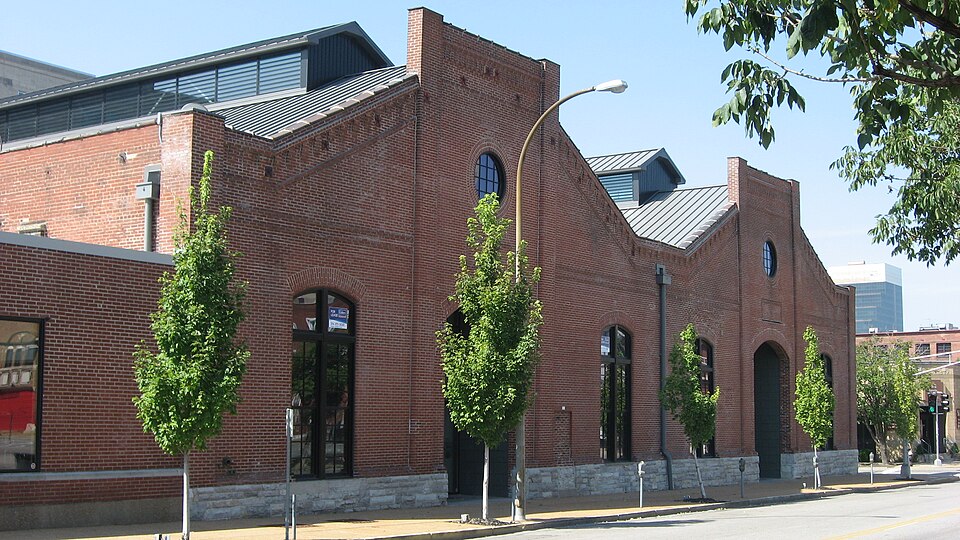
Monsanto St. Louis Steam Plant Asbestos Claims: A Legal Guide for Missouri Workers
Source note: Products, equipment, and companies identified in this article are drawn from public asbestos litigation records, court filings, EPA and OSHA regulatory databases, and publicly available industry records. Product identifications and company references reflect what has been alleged or documented in publicly filed litigation. This article does not constitute a finding of liability against any company.
⚠️ CRITICAL DEADLINE WARNING FOR MISSOURI ASBESTOS VICTIMS
Missouri law gives you 5 years from your diagnosis date to file an asbestos claim — not 5 years from when your exposure occurred, and not 5 years from when symptoms appeared. The clock starts the day you receive your mesothelioma, asbestosis, or lung cancer diagnosis. If you miss this deadline, Missouri courts are permanently barred from hearing your case. No exceptions. No extensions. No second chances.
That deadline is now under direct legislative threat. Missouri If signed into law, HB 1664 would cut your filing window from 5 years down to 3 years — eliminating two full years that Missouri asbestos victims have relied on to build their cases. This bill could reach the Governor’s desk at any time.
Even under the current 5-year window, waiting destroys cases. Witnesses in their 70s and 80s die before depositions are taken. Employment records vanish when plants close. Dozens of manufacturers must be identified and served. More than 60 asbestos bankruptcy trusts each run their own separate claims processes. A mesothelioma case cannot be built overnight.
If you or a family member has been diagnosed and worked at this facility, call a Missouri mesothelioma lawyer today.
Workers who reported to the Monsanto district heating steam plant in St. Louis trusted that their employer was keeping them safe. They weren’t. For 56 years — from 1946 through 2002 — insulators, pipefitters, boilermakers, and electricians worked daily alongside Johns-Manville pipe covering, Kaylo block insulation, Cranite gasket material, and Monokote asbestos cement that released microscopic fibers into the air they breathed. Those fibers don’t leave the body. Decades later, they cause mesothelioma, asbestosis, and lung cancer.
If you or a family member worked at this facility and has since been diagnosed with one of these diseases, the documented product history and litigation record for this specific plant can form the foundation of a legal claim. An experienced asbestos attorney in Missouri can evaluate your case, identify liable defendants, and begin building your claim before critical evidence disappears. Missouri law sets a hard deadline, and pending legislation may shorten it before you finish reading this page.
Here is what you need to know.
What Was the Monsanto District Heating Steam Plant?
Monsanto operated this natural gas-fired facility as part of its broader chemical manufacturing infrastructure in St. Louis — the same Mississippi River industrial corridor that included Monsanto Chemical’s Sauget, Illinois operations and extended across the river into St. Louis County. The plant generated 5.9 MW of thermal output and distributed high-pressure steam through an extensive network of pipes, valves, and flanged connections throughout the complex.
This corridor — stretching from Granite City Steel and the Wood River refineries on the Illinois side to the Monsanto complex, Labadie Energy Center in Franklin County, and Portage des Sioux Power Plant in St. Charles County on the Missouri side — was one of the most asbestos-intensive industrial environments in the American Midwest. Workers frequently crossed state lines to take jobs on both banks of the river, and many accumulated asbestos exposure in Missouri and Illinois over entire careers.
District heating systems are asbestos-intensive by design. Maintaining steam temperatures across long pipe runs requires heavy insulation. From the facility’s opening through the 1980s and beyond, that insulation almost universally contained asbestos — not by accident, but because the mineral’s heat resistance, tensile strength, and low cost made it the industry standard for industrial insulation throughout most of the twentieth century.
The plant operated from 1946 through 2002, covering the entire peak era of industrial asbestos use in the United States. Insulators who worked here were frequently members of Heat and Frost Insulators Local 1 out of St. Louis — the same union local whose members worked at Labadie Energy Center in Franklin County, Portage des Sioux Power Plant in St. Charles County, and Granite City Steel across the river in Madison County, Illinois. Pipefitters and plumbers came primarily from Plumbers and Pipefitters UA Local 562, also headquartered in St. Louis. Boilermakers at this facility and comparable plants throughout the corridor were typically members of Boilermakers Local 27, which represented workers at industrial steam and power generation facilities across the St. Louis metropolitan area on both sides of the Mississippi.
Why Asbestos Was Used Here — and Why It Was Deadly
The Logic of Asbestos in Steam Systems
From roughly 1900 through the mid-1970s, no serious competitor to asbestos existed for high-temperature industrial pipe insulation. Every major component of a steam system like this one relied on asbestos-containing materials:
- Pipe covering — molded half-sections of Kaylo or Thermobestos wrapped around steam and condensate lines
- Block insulation — Aircell and Unibestos packed around boilers and large vessels
- Asbestos cement — Monokote troweled over irregular surfaces and joints
- Gaskets — Cranite and Superex sheet materials cut to seal every flanged connection
All of these products were present at the Monsanto St. Louis facility — and the same product record repeats across the Mississippi River industrial corridor, from the Monsanto campus through the refineries at Wood River and Roxana to the steel operations at Granite City.
What Made It So Dangerous
What made asbestos effective as an insulator is exactly what made it lethal. When Kaylo pipe covering was cut, when Unibestos block insulation was removed, when Monokote cement cracked and was sanded, microscopic fibers became airborne and invisible to the naked eye. Workers inhaled them without knowing it. The fibers lodge permanently in lung tissue and in the pleural lining. Disease follows years or decades later — which is why workers who retired in the 1980s are receiving mesothelioma diagnoses today.
The Regulatory Timeline
- 1971 — OSHA established its first enforceable asbestos exposure standard
- 1970s — EPA issued its initial asbestos regulations
By the time any regulatory framework existed, workers at this facility had already spent years — in many cases, entire careers — breathing asbestos dust from Johns-Manville, Owens-Illinois, Eagle-Picher, and W.R. Grace products with no respiratory protection. Even after standards were established, enforcement was inconsistent and threshold limits remained dangerously high. Renovation and maintenance work continued to disturb legacy Thermobestos and Aircell insulation well into the 1990s and 2000s. Workers who removed and replaced those materials in the plant’s later years faced exposures every bit as dangerous as those who had installed them originally.
Missouri Asbestos Filing Deadlines — Why You Must Act Now
Missouri’s statute of limitations gives asbestos victims 5 years from the date of medical diagnosis to file a claim under Missouri Revised Statutes §516.120. That deadline is firm and absolute. Missouri courts do not grant extensions because a victim’s health declined, because a witness became unavailable, or because a family was focused on treatment. When the deadline passes, the right to compensation is gone permanently.
That 5-year window is now in jeopardy.
Missouri If signed into law, the Missouri asbestos filing deadline for new claims would drop from 5 years to 3 years from diagnosis. For a victim diagnosed today, that means losing 730 days — two full years — of time to gather evidence, identify defendants, and build the legal record a mesothelioma case requires. No provision would protect victims who waited under the assumption that the 5-year window would hold.
But even setting aside the legislative threat entirely, 5 years is not as long as it sounds. Here is why every month of delay creates real, irreversible harm:
Witnesses die. The coworkers who can testify that they worked alongside you when Kaylo was being cut, that no respiratory protection was provided, that a foreman was present when Monokote was disturbed — those witnesses are in their 70s and 80s. They are managing their own illnesses. They pass away before depositions can be scheduled. Once a witness is gone, their testimony is gone with them.
Employment records disappear. Monsanto’s plant operated for 56 years and closed in 2002. Records have been archived, transferred, and in some cases destroyed. Identifying which union local dispatched a worker to which job, in which year, under which foreman, requires documents that become harder to locate with every passing month.
Building a mesothelioma case takes time. A complete asbestos claim requires identifying every manufacturer whose products were present at each facility where exposure occurred, locating coworker witnesses, obtaining union dispatch records and Social Security employment histories, and retaining expert witnesses who can establish the medical and industrial hygiene foundation of the claim. This cannot be done in weeks. It requires months of methodical legal and investigative work that can only begin after a qualified mesothelioma lawyer in Missouri is retained.
The bankruptcy trust system runs parallel to litigation — and it is not simple. More than 60 asbestos manufacturers have filed for bankruptcy and established compensation trusts — including Johns-Manville, Owens Corning, Eagle-Picher, and W.R. Grace, all of whom manufactured products documented at this facility. Each trust operates independently, applies its own eligibility criteria, and requires its own submission. Trust claims and civil litigation must be managed simultaneously. Missing a trust deadline is money left on the table that cannot be recovered.
Who may be liable for Asbestos Exposure at This Facility?
Liability in a Monsanto steam plant asbestos case does not fall on a single defendant. It is distributed across multiple categories of responsible parties, each of whom contributed to the exposure may be associated with the development of asbestos-related disease.
Product manufacturers bear primary liability. Johns-Manville manufactured the pipe covering and block insulation that ins
Missouri DNR Asbestos Notification Records
The following 9 project notification(s) are documented with the Missouri Department of Natural Resources (NESHAP program) for Trigen in St. Louis. These are public regulatory records.
| Project ID | Year | Site / Building | Operation | ACM Removed | Contractor |
|---|---|---|---|---|---|
| A5529-2011 | 2011 | Trigen Power Plant | OM | Will advise per project. | Envirotech, Inc. |
| A5625-2011 | 2012 | Trigen Power Plant | OM | Will advise per project. | Envirotech, Inc. |
| A5967-2012 | 2013 | 2013 O&M Trigen Power Plant | OM | Will advise per project. | Envirotech, Inc. |
| A6265-2013 | 2014 | 2014 O&M Trigen Power Plant | OM | Will advise per project. | Envirotech, Inc. |
| A6599-2014 | 2015 | 2015 O&M Trigen Power Plant | OM | Will advise per project. | Envirotech, Inc. |
| A6882-2015 | 2016 | 2016 O&M Trigen Power Plant | OM | Will advise per project. | Envirotech, Inc. |
| 1229 | 2012 | Trigen Power Plant Pipe Line (BeeHat Bldg) | A | 8000sf frbl ACM debris | Midwest Service Group |
| 1248 | 2012 | Trigen Power Plant (emergency-steam line exploded) | A | 20 lf steam line | Envirotech, Inc. |
| A5530-2011 | 2010 | Trigen Boiler #5 | Renovation | 160sf frbl pipe insulation | Envirotech, Inc. |
Source: Missouri Department of Natural Resources, NESHAP Asbestos Abatement & Demolition/Renovation Notification Program — public regulatory records.
For informational purposes only. Not legal advice. No attorney-client relationship is created by reading this page. © 2026 Rights Watch Media Group LLC — Disclaimer · Privacy · Terms · Copyright
Recent News & Developments
No facility-specific incident reports, regulatory citations, or enforcement actions related to the Trigen Energy district heating and steam plant in St. Louis appear in currently available public records or recent news archives. However, the regulatory and litigation context for operations of this type — centralized district steam systems relying on aging boiler infrastructure, underground pipe distribution networks, and mechanical room installations — is well documented at the industry level and warrants close attention.
Regulatory Landscape
Facilities of this category remain subject to EPA National Emission Standards for Hazardous Air Pollutants (NESHAP), codified at 40 CFR Part 61, Subpart M, which governs asbestos-containing material (ACM) disturbance during renovation and demolition activities. Any planned or emergency maintenance involving pipe insulation, boiler block insulation, or valve and flange packing at steam distribution facilities triggers mandatory notification and work practice requirements under these standards. OSHA’s construction standard at 29 CFR 1926.1101 similarly applies to any contractor or maintenance trade worker disturbing ACM during repair or renovation cycles. Missouri’s state environmental programs, administered through the Missouri Department of Natural Resources (MDNR), incorporate these federal standards and require licensed asbestos abatement contractors for qualifying projects.
Product Identification Context
District heating systems operating in St. Louis through the mid-twentieth century routinely relied on thermal insulation products manufactured by Johns-Manville and Garlock — both of which have been extensively documented in asbestos litigation nationally. Johns-Manville supplied amosite and chrysotile-containing pipe covering, block insulation, and boiler cement widely used in commercial and municipal steam applications through the 1970s. Garlock manufactured asbestos-reinforced gaskets and packing materials standard to high-temperature, high-pressure steam valve assemblies. Both companies subsequently entered bankruptcy as a direct result of asbestos liability, with Johns-Manville establishing the Manville Personal Injury Settlement Trust and Garlock Sealing Technologies resolving its own substantial asbestos docket through reorganization proceedings. Workers performing maintenance or installation tasks at this class of facility alongside these materials — pipefitters, insulators, boilermakers, and steamfitters — represent occupational groups with well-recognized elevated exposure profiles documented in published epidemiological literature.
Demolition and Renovation Considerations
St. Louis’s district energy infrastructure has undergone incremental modernization in recent decades. Any decommissioning of older pipe runs, mechanical equipment rooms, or boiler casings at facilities in this network would constitute a regulated renovation or demolition event under NESHAP, requiring prior ACM surveys, licensed abatement, and MDNR notification. No specific abatement orders or enforcement actions for this particular facility have been identified in accessible public filings at this time.
Workers or former employees of Trigen Energy St Louis Missouri district heating steam plant boiler pipe covering block insulation Johns-Manville Garlock who were diagnosed with mesothelioma, lung cancer, or asbestosis may have legal rights under Missouri law. Missouri § 537.046 extends the civil filing window for occupational disease claims.